The 1% Difference: Why Small Proportional Changes Produce Outsized Perceptual Impact

In more than two decades of clinical practice, I have observed a pattern that initially surprised me and now informs almost every consultation I conduct: the changes that produce the most meaningful improvement in how a face is perceived are frequently the smallest ones. Not the most dramatic, not the most extensive, but the most precisely targeted — a millimetre of volume in exactly the right plane, a subtle adjustment to brow position, a fractional softening of a single line that was disproportionately drawing the eye.
I refer to this, somewhat informally, as the 1% difference: the observation that facial perception often hinges on a small number of specific proportional relationships, and that correcting these — rather than pursuing broad, undifferentiated treatment across the entire face — tends to produce results that are both more natural in appearance and more satisfying to the individual receiving them. This stands in some contrast to a more maximalist approach, sometimes encouraged by aggressive marketing or a desire for dramatic, immediately visible change, which can inadvertently working against the very goal of looking well.

This concept has significant implications for how women over 40 might think about aesthetic treatment: rather than approaching each visit with a broad, undifferentiated goal of ‘looking more youthful,’ there is considerable value in identifying the specific one or two proportional relationships that, if addressed, would produce the greatest perceptual return — and treating those precisely, while leaving the rest of the face largely undisturbed.

In this article, I want to explain the perceptual science underlying this principle, the practical treatment philosophy it suggests, and how patients might use this understanding to approach consultation with greater clarity and, often, considerably more conservative treatment plans than they may have initially anticipated.

It is worth stating plainly that this is not an argument against surgical or more extensive treatment where it is genuinely warranted. Rather, it is an argument for precision in identifying what, specifically, is warranted for a given individual, before determining the scope of treatment. Some patients do have broad, multi-area structural change that benefits from a more comprehensive approach; others have a single, specific proportional concern that has been driving a disproportionate share of their dissatisfaction. Distinguishing between these two scenarios is, in my view, one of the more consequential judgements made during any aesthetic consultation.

Scientific Background

The Perceptual Science of Small Change

Aesthetic improvement does not scale linearly with the amount of treatment applied — past a certain point, more can start to work against you.

Human facial perception research consistently demonstrates that observers are highly sensitive to specific proportional relationships — the ratio between eye and brow spacing, the angle of the jawline relative to the neck, the degree of cheek projection relative to the lower face — while being comparatively insensitive to the overall volume or extent of treatment applied. This asymmetry between what observers notice and what treatments often target is, I believe, central to understanding both the successes and the more conspicuous failures of aesthetic practice.
Anchor Points in Facial Perception
Certain facial landmarks appear to carry disproportionate weight in overall perception of age, health and vitality. Brow position, for instance, has been shown in perceptual research to influence perceived mood and alertness substantially, independent of other facial features. Similarly, the relationship between the jawline and the neck — sometimes referred to clinically as cervicomental angle — has an outsized influence on perceived age, often more so than the degree of facial line or wrinkle present. Understanding which of these anchor points is most relevant to a given individual’s face allows treatment to be directed with far greater precision than a generalised approach.
The Law of Diminishing (and Reversing) Returns
A further principle worth understanding is that aesthetic improvement does not scale linearly with the amount of treatment applied. Early, targeted correction of a genuine proportional deficit tends to produce a substantial perceptual improvement. Beyond a certain point, however, additional treatment in the same area produces progressively smaller returns, and past a further threshold, can begin to actively detract from the result — introducing disproportion where none previously existed, or creating an appearance that reads as altered rather than well. This non-linear relationship is one of the more important, and least widely understood, principles in aesthetic treatment planning, and it underlies much of the caution I bring to recommending extensive treatment plans.
Why the Brain Prioritises Certain Relationships
Evolutionary and developmental psychology research suggests that human perception of faces evolved to rapidly assess health, fertility and emotional state — functions that rely heavily on a relatively small number of proportional cues rather than an exhaustive assessment of every facial feature. This may explain why treatments targeting these specific cues tend to produce perceptual impact disproportionate to their physical extent, while broader, less targeted treatment often fails to produce a commensurate improvement in how ‘refreshed’ or ‘well’ a person is perceived to look.
Symmetry Versus Absolute Measurement
Another important perceptual nuance is that observers tend to respond more strongly to relative symmetry and proportion between features than to any single feature’s absolute measurement. A jawline that is mildly undefined but symmetrical and proportionate to the rest of the face is generally perceived more favourably than one that has been aggressively augmented to an absolute standard of definition without regard for how it relates to the eyes, cheeks and neck. This is a further reason why isolated, area-specific treatment plans, developed without reference to the whole face, can inadvertently create new areas of disproportion even while successfully addressing the area originally targeted.

Treatment options

Applying Precision Over Volume

Translating the 1% difference principle into practice involves a shift in consultation approach: rather than beginning with a menu of available treatments, the process begins with careful facial assessment to identify which specific proportional relationships, if any, are contributing most significantly to a patient’s concerns.
Assessment-Led Treatment Planning
A thorough assessment for this approach typically involves evaluating the face at rest and in motion, from multiple angles, with attention to specific proportional relationships rather than a general impression. This might include assessing brow height and shape relative to the orbital rim, cheek projection relative to the lower face, jawline definition relative to the neck, and the symmetry of paired features such as the eyes or nasolabial folds. The goal of this assessment is to identify the smallest set of interventions likely to produce the most meaningful perceptual improvement, rather than defaulting to a broader treatment plan.
Non-Surgical Precision Treatments
  • Targeted neuromodulator dosing: rather than treating the entire upper face uniformly, a precisely calibrated dose applied to a specific muscle group — such as the muscles contributing to brow position — may help address a single disproportionate feature with minimal impact elsewhere.
  • Micro-volumising with dermal filler: small, precisely placed volumes in specific anatomical planes, such as the lateral cheek or pre-jowl sulcus, may help correct a localised proportional deficit without broader facial volumisation.
  • Selective skin resurfacing: rather than treating the entire face, resurfacing may be concentrated on a specific area — such as the perioral region — where textural change is most contributing to perceived age.
  • Thread-based or minimally invasive lifting techniques: in appropriately selected patients, these may offer a modest, targeted improvement to a specific area of laxity without the more extensive recovery associated with surgical intervention.
Surgical Precision Approaches
Even within surgical practice, this principle has relevance. A patient whose primary proportional concern is jawline definition may be better served by a more limited procedure targeting the lower face and neck than by a comprehensive facelift addressing areas that were not, in fact, contributing significantly to her perceived age. Conversely, a patient with a genuine, broader pattern of structural change may find that a more comprehensive procedure produces a more harmonious result than an attempt to address multiple areas individually and non-surgically over an extended period. The key clinical judgement lies in accurately identifying which scenario applies to a given individual, which requires a thorough assessment rather than a default toward either minimal or maximal intervention.
The Value of Staged, Reassessed Treatment
Because small, precise interventions tend to be more forgiving and reversible than broad treatment plans, this approach often lends itself well to a staged process: addressing the single most significant proportional concern first, allowing time to assess the perceptual impact, and only proceeding to further treatment if a genuine remaining deficit is identified. This reduces the risk of unnecessary treatment and allows both patient and practitioner to calibrate subsequent decisions based on observed, rather than anticipated, results.
A Practical Example
Consider two patients presenting with a similar chief concern of ‘looking tired.’ On assessment, the first is found to have a specific deficit in upper cheek volume that has created shadowing beneath the eyes, disproportionately affecting how rested she appears. The second is found to have a more generalised pattern of skin laxity and volume loss across the mid and lower face. For the first patient, a small, precisely placed volume of filler in the upper cheek may meaningfully address her primary concern. For the second, the same treatment applied in isolation is unlikely to produce a comparable improvement, and a broader conversation about her options — potentially including surgical consultation — may better serve her actual clinical picture. Both patients presented with a similar complaint, but accurate assessment led to substantially different, individually appropriate recommendations.

Lifestyle & holistic factors

Everyday Proportional Influences

While the 1% difference principle applies most directly to clinical treatment planning, several lifestyle factors interact meaningfully with the proportional relationships discussed throughout this article.
Facial Expression and Habitual Patterns
Habitual facial expressions — a tendency to frown when concentrating, or to raise the brows when reading — can, over years, contribute to the specific proportional changes that later become the focus of treatment. While these habits are often unconscious and difficult to modify, awareness of them can inform a more complete understanding of why a particular area has developed disproportionately compared to the rest of the face.
Sleep Position and Facial Asymmetry
Consistent sleep on one side of the face has been discussed as a potential contributor to mild facial asymmetry over time, an example of how small, repeated daily habits can influence the very proportional relationships this article has focused on. Where relevant, alternating sleep position may form a reasonable, low-cost preventative measure.
Weight Stability
Because facial fat compartments respond to overall body weight fluctuation, significant or repeated weight changes can alter facial proportion independent of any treatment received. Maintaining reasonably stable weight, where feasible, may help preserve the proportional balance achieved through any aesthetic treatment undertaken.
Sun Protection and Skin Quality
As with every topic in this series, consistent sun protection remains foundational, as UV-related skin changes can affect the perceived definition of proportional features such as the jawline and cheek contour, independent of any underlying structural treatment.
Photography and Self-Perception
Many patients form their view of a specific proportional concern through photographs, particularly angles or lighting conditions that can exaggerate certain features unrepresentatively. It is worth approaching self-assessment with some caution in this regard, and where possible, discussing perceived concerns with a practitioner who can assess the face directly, in person and in motion, rather than relying solely on photographic impressions, which do not always reflect how a feature presents in everyday life.

Frequently Asked Questions

Does more treatment always mean better results?
No — the relationship isn’t linear. Early, targeted correction of a genuine deficit tends to produce substantial perceptual improvement. Beyond a certain point, additional treatment in the same area produces progressively smaller returns, and past a further threshold can begin to actively detract from the result.
How do you decide which specific area is actually worth treating?
Through a structured proportional assessment — evaluating the face at rest and in motion, from multiple angles, to identify which specific relationships (brow position, cheek projection, jawline definition) are meaningfully contributing to the concerns being raised, rather than defaulting to a broad treatment plan.
What if my concern feels general rather than tied to one specific area?
This is an important distinction to draw out in consultation. Diffuse dissatisfaction with overall appearance doesn’t always respond well to a single targeted treatment, and may warrant a broader conversation about expectations before any procedure is considered.
Could a practitioner tell me that no treatment is needed at all?
Yes, and this is an entirely appropriate outcome of a thorough assessment when the proportional relationships in question fall within a typical, healthy range — even if a patient has specifically requested treatment.
Why do some small, precise treatments make more visible difference than larger ones?
Human facial perception is highly sensitive to a relatively small number of specific proportional relationships — such as brow height or the angle between jawline and neck — while being comparatively insensitive to overall treatment volume. Targeting these specific anchor points tends to produce outsized perceptual impact relative to the extent of treatment involved.
Is it possible to treat too much of one area without realising it?
Yes. Because improvement doesn’t scale linearly with treatment volume, repeated or excessive treatment in a single area can gradually introduce disproportion, sometimes without the patient noticing the change happening incrementally over time.
How does this precision-first approach affect the cost or number of visits involved?
It often means starting with a smaller, more targeted intervention and reassessing before proceeding further, rather than committing to an extensive plan upfront. This staged approach can, in practice, reduce unnecessary treatment and expenditure over time.
Why might two people with a similar complaint receive quite different treatment recommendations?
Because the underlying anatomical cause of a similar complaint — such as ‘looking tired’ — can differ substantially between individuals. One patient might have a specific, localised volume deficit; another might have a broader, more generalised pattern of change. Accurate assessment, not the presenting complaint alone, determines the appropriate treatment.
Does this approach apply to surgical procedures as well as injectables?
Yes. A patient with a genuinely broad pattern of structural change may be better served by a comprehensive surgical approach, while a patient with a single specific proportional concern may achieve a more harmonious result from a more limited, targeted procedure. Accurate assessment determines which scenario applies.
What should I ask in consultation to make sure I’m not being over-treated?
It is reasonable to ask what specific proportional concern a recommended treatment is targeting, why that particular area has been identified as significant, and whether a smaller or more conservative version of the plan might achieve a comparable result.

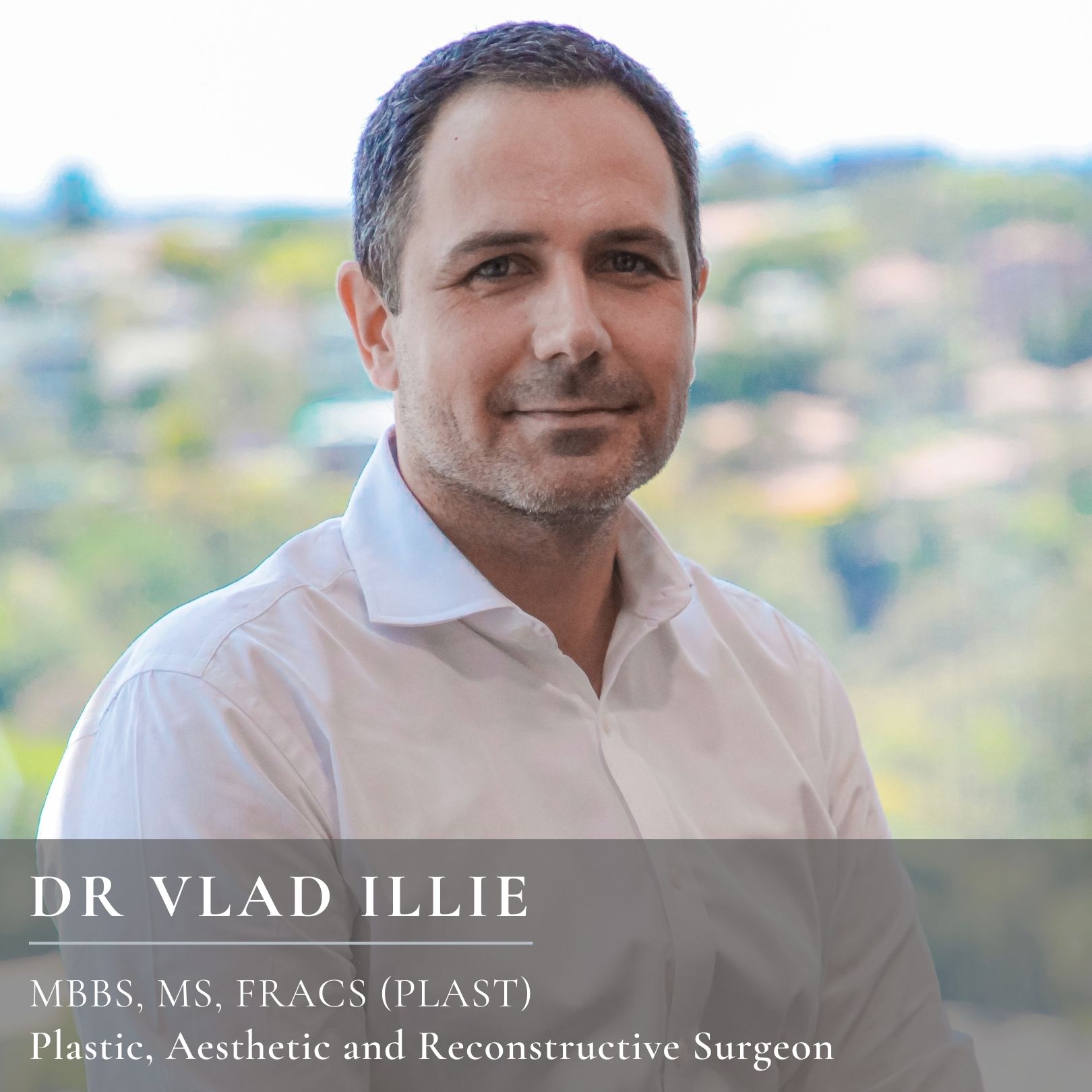
Dr Vlad ILLIE

Specialist Plastic and Reconstructive Surgeon
MBBS, MS, FRACS (plastic and reconstructive surgery)
AHPRA Registration Number MED0000966953

Dr Vlad ILLIE is a Sydney-based specialist plastic and reconstructive surgeon known for his meticulous surgical technique, patient‑centred philosophy, and commitment to natural, long‑term outcomes. With extensive experience across aesthetic and reconstructive surgery, he combines rigorous, research-led practice with a calm, thoughtful approach that supports patients through every stage of their surgical journey.

In addition to his operative work, patients can access a carefully chosen range of evidence-based non‑surgical treatments in his clinic, ensuring a cohesive and thoughtful pathway of care.

Ready to explore your options?

If you’re considering a procedure or simply want clarity on what suits you, starting with a conversation is the most helpful step. Our team offers thoughtful, personalised guidance to help you understand your options and your timing.

Read This Next

Treatment Pairings: The Clinical Logic of Combining Procedures

A question I field regularly in consultation concerns not which single treatment to pursue, but how different treatments interact with one another: whether a particular injectable can be combined with a particular laser, whether surgery should precede or follow...

Plastic Surgery Articles – Dr Vlad ILLIE in Sydney

Explore clear, clinically grounded guidance on contemporary plastic surgery and cosmetic medicine. Each piece offers practical information to help you understand modern techniques, treatment considerations, and the principles that shape contemporary aesthetic...

Breast Augmentation Surgery in Sydney

  Breast augmentation (augmentation mammoplasty) is a surgical procedure that involves placing implants to increase breast size or improve breast shape. It addresses concerns such as changes in breast volume that may occur after pregnancy, weight fluctuations, or...

Arm Lift Surgery in Sydney

   An arm lift (brachioplasty) is a surgical procedure that addresses changes in the upper arm appearance that can occur after significant weight loss, ageing, or other factors, such as loose skin, excess fat deposits, and reduced arm contour definition.   The...

Schedule  a  Consultation

Ph (02) 9101 4707
Fax (02) 9182 0092
office@drvladillie.com.au


Sydney Centre for Plastic Surgery

Suite 1702, Westfield Tower 2
101 Grafton St
Bondi Junction NSW 2022


Central Coast Aesthetics

Suite 2, Albany St North
Gosford NSW 2250

Breast reduction Sydney, Breast Reduction Surgery Sydney, Boob reduction, Breast Surgery, Breast reduction surgery, Breast surgery for back pain, Surgery for large breasts, Oversized breast surgery – Dr Vlad ILLIE, plastic surgeon Sydney

Breast Augmentation Sydney, Breast Surgery Sydney, Boob job Sydney, Breast Implants Sydney Eastern Suburbs, Breast Enlargement Sydney, Breast Enhancement, Breast Enhancement Sydney, Breast implant surgeon Sydney, Silicone Implants, Motiva Implants – Dr Vlad ILLIE, plastic surgeon Sydney

Breast Reconstruction Surgery Sydney, Breast Cancer Reconstruction Sydney, Diep Flap Surgery, Reconstructive Surgery, Breast Reconstructive Surgery, Breast Surgery Post-Breast Cancer, Breast Surgery Post-Mastectomy – Dr Vlad ILLIE, plastic surgeon St Vincent’s Hospital Sydney

Mummy Makeover, Saggy Breasts Surgery, Breast Lift & Implant, Boob lift, Breast enlargement and lift, Breast enhancement Sydney, Breast surgery post-pregnancy, Breast surgery post-weight loss  – Dr Vlad ILLIE, plastic surgeon St Vincent’s Hospital Sydney

Breast Augmentation Sydney, Breast Surgery Sydney, Boob job Sydney, Breast Implants Sydney Eastern Suburbs, Breast Enlargement Sydney, Breast Enhancement, Breast Enhancement Sydney, Breast implant Surgeon Sydney, Silicone Implants, Motiva Implants – Dr Vlad ILLIE, plastic surgeon

Breast Revision, Breast Surgery Sydney, Breast implant revision, Breast augmentation revision, Breast implant replacement, Breast Implant Reduction, Breast Implant Replacement, Surgery for botched breasts – Dr Vlad ILLIE, plastic surgeon

Tuberous breast surgery Sydney, tuberous breast correction Sydney, tuberous breasts, plastic surgeon Sydney, cosmetic surgeon Sydney, severe tuberous breasts, mild tuberous breast, Tuberomastoplasty, Lollypop Breast Lift – Dr Vlad ILLIE, plastic surgeon Sydney

Asian Breast Surgery Sydney, Asian breast implants, Asian scar healing breast implants, Asian breast reduction Sydney, Asian breast revision Sydney – Dr Vlad ILLIE, plastic surgeon Bondi Junction

Breast implant removal Sydney, Breast explant Sydney, breast implant removal surgery, breast implant removal plastic surgeon Sydney, BREAST IMPLANT EXPLANTATION SURGERY, removal of the breast implants, breast implant revision procedures performed, including removal of breast implants – Dr Vlad ILLIE, plastic surgeon Sydney