
Among the questions I am asked most consistently in consultation, one stands out for how often the answer disappoints patients hoping for a simpler response: how long will this actually last? The honest answer is almost always some variation of ‘it depends,’ and while this can feel unsatisfying, understanding what it genuinely depends upon is, I believe, more valuable to a prospective patient than any single number could be.
Longevity in aesthetic treatment is not a fixed property of a given procedure so much as the outcome of an equation: the treatment itself, the individual’s underlying biology, their lifestyle and environmental exposures, and their ongoing maintenance all combine to determine how long a given result persists. Two women receiving an identical treatment can experience meaningfully different durability, not due to any difference in the treatment’s technical execution, but due to differences in these other variables.
This distinction matters considerably for informed decision-making. Marketing materials and casual conversation often reduce longevity to a single figure — ‘lasts 12 months,’ ‘lasts several years’ — without acknowledging the substantial individual variation that sits behind these averages. Approaching treatment planning with a genuine understanding of what drives longevity allows for more realistic expectations and, often, better decisions about which treatments align with a given patient’s goals, budget and tolerance for maintenance.
This article examines the biological and behavioural factors that determine how long aesthetic results last, general (though individually variable) timelines for common treatment categories, and how to think about the true, cumulative cost — financial and otherwise — of treatments with differing longevity profiles.
I also want to address, directly, a related question that often accompanies discussions of longevity: whether choosing a more durable or surgical option represents a more sensible long-term decision than a shorter-duration alternative. This is not a question with a universally correct answer. Shorter-duration treatments offer flexibility, reversibility and the ability to adjust course as one’s face, preferences or circumstances change, which some patients value considerably. Longer-duration options offer reduced maintenance burden but less flexibility should preferences shift. Neither is inherently superior; the right choice depends on individual priorities, which this article aims to help clarify rather than resolve on your behalf.
Scientific Background
What Determines Durability
No aesthetic treatment halts ageing — it modifies a particular aspect of appearance at a particular point in time, after which natural ageing continues from that new baseline.
The longevity of any aesthetic treatment is governed by a combination of the treatment’s underlying mechanism and the biological environment into which it is introduced. Understanding both halves of this equation clarifies why identical treatments can produce different durability across individuals.
Mechanism-Based Longevity
Different treatment categories are inherently designed around different timelines. Neuromodulators work by temporarily reducing the activity of targeted muscles, an effect that naturally diminishes as the treatment is metabolised and muscle activity gradually returns, typically over a period of months. Dermal fillers vary considerably in composition and are designed with different degradation profiles, from products intended to be broken down within months to those designed for longer persistence. Biostimulatory treatments work differently again, by encouraging the body’s own collagen production, meaning their visible effect builds gradually and, once established, tends to decline gradually as well, rather than resolving at a fixed endpoint. Surgical procedures, by contrast, produce structural change that does not ‘wear off’ in the same sense, though the tissue involved continues to age from the point of surgery onward, meaning the surgical result gradually integrates with the ongoing, separate process of natural ageing.
Individual Metabolic Variation
Metabolic rate, which varies considerably between individuals, influences how quickly certain injectable treatments are broken down, meaning the same product can persist for meaningfully different durations in different patients. Factors such as physical activity level, which can influence metabolic rate and circulation, are sometimes discussed anecdotally within clinical practice as contributing to this variation, though robust individual prediction remains difficult, and patients are generally best advised to assess their own personal response after an initial treatment rather than relying solely on published averages.
Environmental and Behavioural Acceleration
Beyond the treatment itself, ongoing environmental and behavioural factors continue to act upon both treated and untreated tissue. Cumulative sun exposure continues to degrade collagen and accelerate skin ageing regardless of prior treatment, effectively working against the longevity of any result. Smoking has a well-documented negative effect on skin collagen and healing capacity, and is understood to reduce the longevity of both surgical and non-surgical results. Significant weight fluctuation can alter facial and body volume independent of treatment, sometimes appearing to reduce the visible duration of a volumising treatment’s effect, even though the treatment itself may not have changed.
The Concept of the Ageing Baseline
It is important to understand that no aesthetic treatment halts the ongoing process of ageing; it modifies a particular aspect of appearance at a particular point in time, after which natural ageing continues from that new baseline. This means that even a technically successful, well-executed treatment will, over time, be affected by the same underlying processes discussed throughout this series, and the perceived ‘end’ of a treatment’s effect often reflects this ongoing ageing process as much as the treatment itself wearing off.
Why Published Averages Can Mislead
Published longevity figures, whether from manufacturer data or clinical studies, typically represent an average or median across a study population, often measured under relatively controlled conditions. Individual patients may reasonably experience results outside this published range in either direction, and a practitioner citing a specific duration should ideally frame it as a general tendency rather than a guarantee. Patients are encouraged to view published figures as a starting point for discussion rather than a precise prediction of their own individual experience.
Treatment Options
Longevity Profiles Across Common Categories
While individual variation remains significant, general longevity tendencies can be discussed for common treatment categories, always with the caveat that these are broad guides rather than guarantees.
Shorter-Duration Treatments
- Neuromodulators: effects generally begin to diminish over a period of months, with many patients noting a gradual, rather than sudden, return of muscle movement, prompting consideration of repeat treatment to maintain the effect.
- Certain lighter dermal fillers: some filler formulations are specifically designed for shorter persistence, often selected for areas requiring more subtle, adjustable volume or for patients wishing to trial a treatment before committing to a longer-lasting option.
- Superficial chemical peels: the direct exfoliative effect is temporary, though a course of repeated treatments may contribute to more sustained improvement in overall skin texture and tone over time.
Intermediate-Duration Treatments
- Structural dermal fillers: many commonly used filler products are designed for a longer duration than lighter alternatives, though individual metabolism and treatment area both influence how long this effect is maintained.
- Skin biostimulators: the collagen-stimulating effect of these treatments tends to build gradually and persist for an extended period following a treatment course, though it is not indefinite and gradual maintenance treatment is often considered.
- Energy-based skin tightening devices: improvements in skin laxity from these non-surgical technologies tend to persist for a meaningful period, though they do not halt the ongoing structural changes discussed in the scientific background section above.
Longer-Duration and Surgical Options
- Fat grafting: fat that successfully integrates following transfer is understood to behave similarly to the body’s own existing fat tissue, meaning it is subject to the same ageing and weight-related changes as surrounding tissue, but does not have a fixed ‘wearing off’ point in the way injectable products do.
- Surgical lifting procedures: these produce a structural change that persists over the longer term, though the treated tissue continues to age from the point of surgery onward, meaning the ultimate visible longevity varies according to the individual’s own rate of subsequent ageing and lifestyle factors.
- Combined surgical and skin-quality approaches: pairing a structural surgical procedure with ongoing skin-quality maintenance (as discussed in our article on treatment pairings) may support a more sustained overall appearance than either approach in isolation.
The True Cost of Maintenance
When comparing treatments with different longevity profiles, it is worth considering the cumulative cost of repeated treatment over time, rather than the cost of a single session in isolation. A shorter-duration treatment requiring regular repeat sessions may, over a period of several years, represent a comparable or greater total investment than a longer-lasting or surgical alternative, and this calculation is worth discussing explicitly during consultation for patients weighing these options against one another.
Sequencing Repeat Treatment Sensibly
For treatments requiring ongoing maintenance, the timing of repeat sessions matters. Undertaking repeat treatment too early, before the prior treatment’s effect has meaningfully diminished, can lead to gradual over-accumulation of product or effect, which may itself contribute to a less natural appearance over time, echoing the proportionality principles discussed elsewhere in this series. Conversely, allowing an extended gap before repeat treatment is not harmful, though it typically means a return closer to the original, untreated baseline before the treatment’s effect is re-established. A considered practitioner will advise on appropriate timing based on individual response, rather than a fixed calendar interval applied uniformly to all patients.
Lifestyle & holistic factors
The Longevity Multiplier
Because ongoing lifestyle factors meaningfully influence how long any treatment’s benefit is perceived to last, attention to these factors represents a genuine, low-cost extension of any clinical investment made.
Sun Protection as a Longevity Multiplier
Given the well-established relationship between UV exposure and collagen degradation, consistent sun protection may meaningfully extend the perceived longevity of both surgical and non-surgical results, by slowing the rate at which the surrounding, untreated skin continues to age around the treated area.
Smoking Cessation
Given the documented negative relationship between smoking and skin collagen, healing capacity and overall treatment longevity, smoking cessation is among the most impactful lifestyle interventions available to patients seeking to preserve the results of any aesthetic treatment undertaken.
Weight Stability
As discussed, significant weight fluctuation can alter facial and body volume independent of treatment. Patients considering volumising treatments in particular may wish to discuss their weight stability and any anticipated future changes with their practitioner, as this may influence which treatment approach is likely to offer the most durable result.
Consistent Skincare Maintenance
An ongoing, appropriately formulated skincare routine, incorporating sun protection and skin-supportive actives, may help maintain overall skin quality between procedural treatments, supporting the longevity of the broader aesthetic result rather than any single intervention in isolation.
Sleep and General Health
Adequate sleep and general metabolic health, including management of conditions such as diabetes where relevant, support the body’s broader capacity for tissue repair and maintenance, which may in turn influence how well any aesthetic result is preserved over time, alongside the more commonly discussed factors of sun protection and smoking cessation.
Frequently Asked Questions
What actually happens at a first consultation?
A comprehensive medical history, a physical assessment of the relevant area, and a detailed discussion of options, risks, alternatives (including the alternative of no treatment) and cost — not a quick sales conversation aimed at booking a procedure.
Is there a mandatory cooling-off period for cosmetic procedures in Australia?
Yes, for certain higher-risk procedures, as mandated by the Medical Board of Australia’s specific cosmetic surgery guidelines, which sit alongside broader AHPRA regulation of the profession.
Am I entitled to ask about a practitioner’s specific qualifications?
Absolutely. Patients are entitled to ask about training, experience and relevant specialist registration for the specific procedure being discussed, and a confident, appropriately qualified practitioner should answer clearly and without defensiveness.
What if I want to seek a second opinion before proceeding?
This is entirely reasonable and should never be discouraged by a considered practice, particularly for more significant or surgical procedures. A second opinion reflects thorough decision-making, not distrust.
How is informed consent actually obtained, beyond just signing a form?
Genuine informed consent is an ongoing conversation covering likely benefits, limitations, realistic alternatives, potential side effects and complications, expected recovery, and cost — delivered with sufficient time for questions and, where required, a cooling-off period before proceeding.
What pre-treatment health checks are typically required before surgery?
Depending on the procedure, this may include blood tests, an ECG, and clearance from an anaesthetist, alongside a thorough discussion of current medications, allergies and relevant medical history that could affect healing or safety.
How many follow-up appointments should I expect after a procedure?
This varies by treatment type. Surgical procedures typically involve multiple follow-up visits over the weeks and months following surgery; non-surgical treatments commonly involve a single follow-up some weeks later, though this depends on the specific treatment.
What are the warning signs of a rushed or inadequate consultation?
Pressure to decide quickly, minimisation of risk, reluctance to discuss qualifications openly, or a consultation that moves swiftly to booking without a thorough history and physical assessment are all reasonable grounds for seeking care elsewhere.
Is clinical photography taken during consultation used for marketing?
Clinical photography taken with consent and stored securely as part of the medical record is used for surgical planning only. AHPRA guidelines restrict the use of before-and-after imagery in advertising, and patients are entitled to ask exactly how their photographs will be stored and used.
Can I decline part of a proposed treatment plan without affecting the rest of my care?
Yes. You should feel able to decline any individual element of a proposed plan, or the plan altogether, without it affecting the quality of care and respect you are entitled to receive from your practitioner.
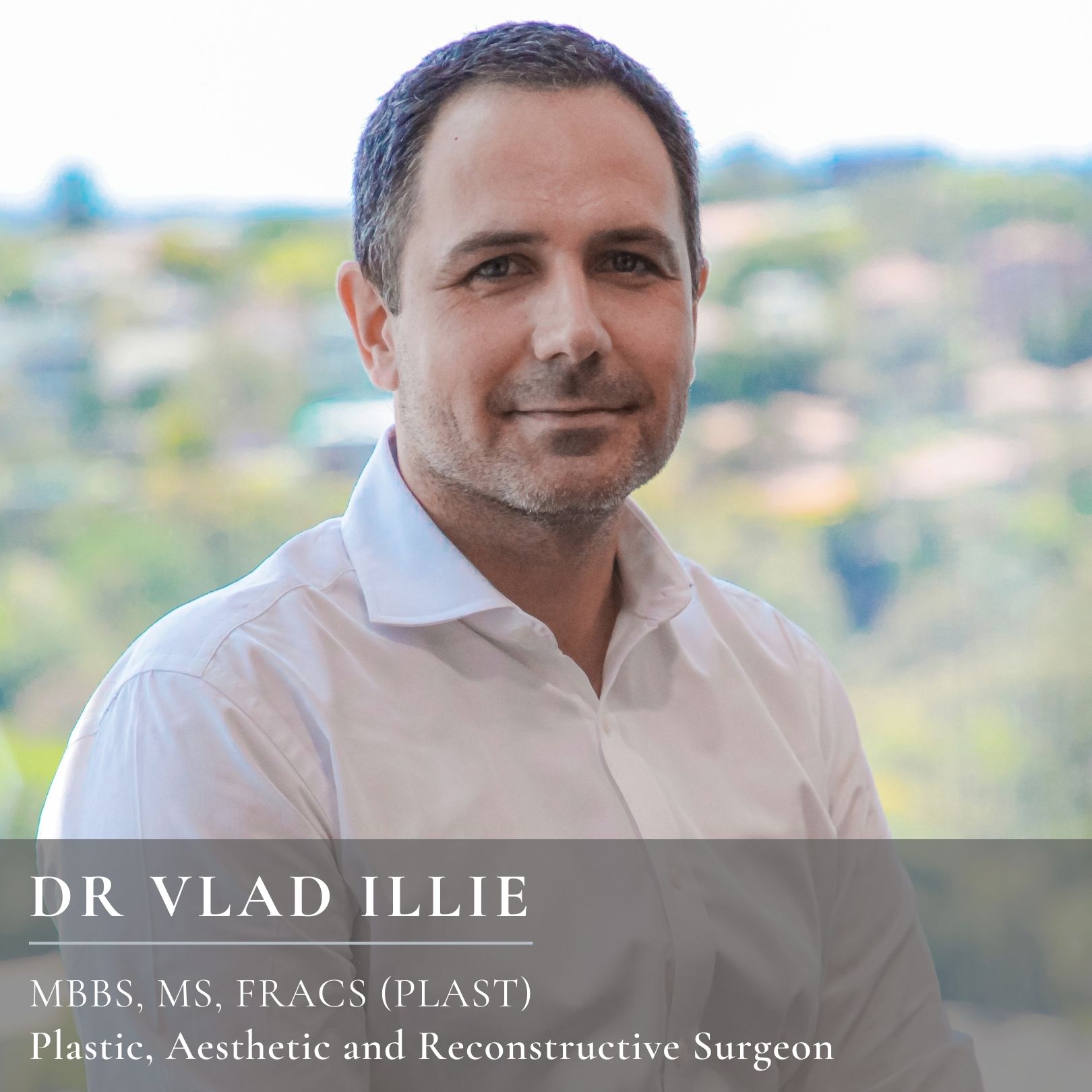
Dr Vlad ILLIE
Specialist Plastic and Reconstructive Surgeon
MBBS, MS, FRACS (plastic and reconstructive surgery)
AHPRA Registration Number MED0000966953
Dr Vlad ILLIE is a Sydney-based specialist plastic and reconstructive surgeon known for his meticulous surgical technique, patient‑centred philosophy, and commitment to natural, long‑term outcomes. With extensive experience across aesthetic and reconstructive surgery, he combines rigorous, research-led practice with a calm, thoughtful approach that supports patients through every stage of their surgical journey.
In addition to his operative work, patients can access a carefully chosen range of evidence-based non‑surgical treatments in his clinic, ensuring a cohesive and thoughtful pathway of care.
Ready to explore your options?
If you’re considering a procedure or simply want clarity on what suits you, starting with a conversation is the most helpful step. Our team offers thoughtful, personalised guidance to help you understand your options and your timing.
Read This Next
Surgical Secrets to a Sharp Jawline: What Makes a Neck Lift Last?
Almost every patient who sits down with Dr Vlad ILLIE for a neck consultation asks for the same thing: tighter skin. It is an entirely understandable request — but it is also, respectfully, the wrong question. Dr ILLIE's approach to neck lifting is built on a...
Breast Implant Removal: What Are Your Options?
Deciding to have breast implants removed is a significant decision, and it comes from all kinds of places. Some women are dealing with a ruptured or ageing implant. Others are responding to capsular contracture, ongoing discomfort, or concerns they've read about...
Why Does the Neck Age First? The Real Reason It Sags Before the Face
It's one of the most common observations patients bring to consultation: “My face still looks like me, but my neck looks so much older.” It's not your imagination, and it's not a sign that anything has gone wrong. There's a real, anatomical reason the neck tends to...
Plastic Surgery Articles – Dr Vlad ILLIE in Sydney
Explore clear, clinically grounded guidance on contemporary plastic surgery and cosmetic medicine. Each piece offers practical information to help you understand modern techniques, treatment considerations, and the principles that shape contemporary aesthetic...
Breast Augmentation Surgery in Sydney
Breast augmentation (augmentation mammoplasty) is a surgical procedure that involves placing implants to increase breast size or improve breast shape. It addresses concerns such as changes in breast volume that may occur after pregnancy, weight fluctuations, or...
Arm Lift Surgery in Sydney
An arm lift (brachioplasty) is a surgical procedure that addresses changes in the upper arm appearance that can occur after significant weight loss, ageing, or other factors, such as loose skin, excess fat deposits, and reduced arm contour definition. The...
Schedule a Consultation
Ph (02) 9101 4707
Fax (02) 9182 0092
office@drvladillie.com.au
Sydney Centre for Plastic Surgery
Suite 1702, Westfield Tower 2
101 Grafton St
Bondi Junction NSW 2022
Central Coast Aesthetics
Suite 2, Albany St North
Gosford NSW 2250
Breast Augmentation Sydney, Breast Surgery Sydney, Boob job Sydney, Breast Implants Sydney Eastern Suburbs, Breast Enlargement Sydney, Breast Enhancement, Breast Enhancement Sydney, Breast implant surgeon Sydney, Silicone Implants, Motiva Implants – Dr Vlad ILLIE, plastic surgeon Sydney
Breast Reconstruction Surgery Sydney, Breast Cancer Reconstruction Sydney, Diep Flap Surgery, Reconstructive Surgery, Breast Reconstructive Surgery, Breast Surgery Post-Breast Cancer, Breast Surgery Post-Mastectomy – Dr Vlad ILLIE, plastic surgeon St Vincent’s Hospital Sydney
Mummy Makeover, Saggy Breasts Surgery, Breast Lift & Implant, Boob lift, Breast enlargement and lift, Breast enhancement Sydney, Breast surgery post-pregnancy, Breast surgery post-weight loss – Dr Vlad ILLIE, plastic surgeon St Vincent’s Hospital Sydney
Breast Augmentation Sydney, Breast Surgery Sydney, Boob job Sydney, Breast Implants Sydney Eastern Suburbs, Breast Enlargement Sydney, Breast Enhancement, Breast Enhancement Sydney, Breast implant Surgeon Sydney, Silicone Implants, Motiva Implants – Dr Vlad ILLIE, plastic surgeon
Breast Revision, Breast Surgery Sydney, Breast implant revision, Breast augmentation revision, Breast implant replacement, Breast Implant Reduction, Breast Implant Replacement, Surgery for botched breasts – Dr Vlad ILLIE, plastic surgeon
Tuberous breast surgery Sydney, tuberous breast correction Sydney, tuberous breasts, plastic surgeon Sydney, cosmetic surgeon Sydney, severe tuberous breasts, mild tuberous breast, Tuberomastoplasty, Lollypop Breast Lift – Dr Vlad ILLIE, plastic surgeon Sydney
Asian Breast Surgery Sydney, Asian breast implants, Asian scar healing breast implants, Asian breast reduction Sydney, Asian breast revision Sydney – Dr Vlad ILLIE, plastic surgeon Bondi Junction
Breast implant removal Sydney, Breast explant Sydney, breast implant removal surgery, breast implant removal plastic surgeon Sydney, BREAST IMPLANT EXPLANTATION SURGERY, removal of the breast implants, breast implant revision procedures performed, including removal of breast implants – Dr Vlad ILLIE, plastic surgeon Sydney