
For many women considering aesthetic treatment for the first time, a significant part of their hesitation has little to do with the treatment itself and considerably more to do with uncertainty about the process: what actually happens in a consultation, what questions will be asked, what a given procedure genuinely involves, and what to expect in the days and weeks that follow. This uncertainty is entirely reasonable, and I find that addressing it directly, before any discussion of specific treatments, tends to produce far more comfortable and informed patients.
There is, understandably, a degree of mystique that surrounds aesthetic and surgical practice, shaped partly by limited public understanding of clinical processes and partly by the private, discreet nature of most patients’ experiences. Very few women discuss the specifics of their treatment openly, which means that much of what the public believes about aesthetic consultation and procedures is pieced together from fragments, some accurate and some considerably less so.
This article aims to draw back that curtain, in a general sense: to walk through what a thorough, well-conducted consultation typically involves, how treatment decisions are properly reached, what governs safety and consent in Australian aesthetic practice, and what a realistic recovery and aftercare process tends to look like. My hope is that greater familiarity with this process will allow you to approach any future consultation, with any practitioner, with clearer expectations and more confident, informed questions.
As with all topics in this series, the specifics of any individual consultation or treatment plan will vary, and this article is intended to provide general orientation rather than a substitute for direct discussion with a qualified practitioner.
It is worth acknowledging that some discretion around aesthetic treatment is entirely reasonable and does not need to be viewed as secrecy. Many women choose not to discuss their treatment publicly for personal reasons, and this is a legitimate choice that deserves respect. The distinction I wish to draw in this article is between reasonable personal privacy and a broader public uncertainty about how the clinical process actually works, which can leave prospective patients feeling unprepared or unsure what questions to ask when they do seek consultation.
Scientific Background
The Structure of Proper Consultation
Genuine informed consent extends well beyond a signed document.
A thorough aesthetic consultation is, at its core, a structured clinical assessment, not a sales conversation, though the distinction is not always obvious to patients unfamiliar with the process. Understanding the components of a proper consultation can help you assess whether a given practitioner is approaching your care with appropriate rigour.
Medical History and Health Screening
A proper consultation begins with a comprehensive medical history: current medications, allergies, prior surgeries or procedures, relevant family history, and any conditions that might affect healing, bleeding risk, or suitability for a particular treatment. This is not a formality; certain medical conditions and medications materially affect which treatments are appropriate, and a practitioner who does not ask detailed questions in this area should prompt some caution.
Physical and Anatomical Assessment
Following history-taking, a physical assessment relevant to the area of concern is conducted — examining skin quality, underlying structure, symmetry, and the specific anatomical features contributing to the patient’s concerns. For surgical consultations, this typically includes a detailed examination, sometimes supported by photography for planning purposes (distinct from promotional before-and-after imagery, which AHPRA guidelines restrict), and a discussion of the anatomical factors relevant to the proposed procedure.
The Regulatory Framework Governing Practice
In Australia, aesthetic and cosmetic medical practice is governed by AHPRA (the Australian Health Practitioner Regulation Agency) alongside the Medical Board of Australia’s specific guidelines for cosmetic procedures. These guidelines mandate, among other requirements, a cooling-off period for certain higher-risk procedures, restrictions on advertising and promotional claims, requirements for informed consent to be genuinely comprehensive rather than a signature obtained in haste, and specific qualifications required for practitioners performing particular categories of procedure. Understanding that this framework exists, and asking a prospective practitioner how they meet these requirements, is a reasonable and encouraged part of any consultation process.
Informed Consent as an Ongoing Process
Genuine informed consent extends well beyond a signed document. It involves a clear discussion of the proposed treatment’s likely benefits, its limitations, realistic alternatives (including the alternative of no treatment), potential side effects and complications, expected recovery, and cost — delivered with sufficient time for the patient to ask questions and, where required by regulation, a cooling-off period before proceeding. A consultation that moves quickly to booking a procedure without this depth of discussion does not meet the standard of genuinely informed consent.
The Role of Photography in Planning
Clinical photography, taken with consent and stored securely as part of the medical record, plays a legitimate role in surgical planning, allowing a surgeon to assess proportion and change over time with more precision than memory alone allows. This is distinct from promotional imagery, which AHPRA guidelines restrict from being used in advertising due to concerns about setting unrealistic expectations or functioning as an inducement to treatment. Patients are entitled to ask how their clinical photographs will be stored, used, and whether they will ever be used for any purpose beyond their own care, and a proper practice should have clear, considered answers to these questions.
Multidisciplinary Input for Complex Cases
For more complex surgical procedures, or for patients with relevant medical comorbidities, appropriate practice may involve input from other specialists — an anaesthetist, a general physician, or a specific relevant specialist depending on the patient’s health history. This multidisciplinary approach reflects appropriately cautious practice rather than unnecessary complication, and patients should not be discouraged from a referral to another specialist if their treating practitioner considers it appropriate.
The Treatment Process
What to Expect at Each Stage
While specific procedures vary considerably, most aesthetic treatments, surgical and non-surgical, follow a broadly similar structural process from initial enquiry through to aftercare.
Initial Enquiry and Screening
Most practices begin with an initial enquiry, sometimes involving a brief screening conversation to establish the general nature of the concern and confirm suitability for consultation. This is generally not the stage at which detailed clinical advice is given, and a practitioner or their team offering specific treatment recommendations before any assessment has occurred should be viewed with some caution.
The Consultation Itself
As outlined above, a proper consultation involves history-taking, physical assessment, and a detailed discussion of options. For surgical procedures, this may involve multiple consultations over a period of weeks, particularly for more significant procedures, allowing time for questions to be considered and, where relevant, second opinions to be sought.
Pre-Treatment Preparation
Once a treatment plan is agreed, preparation instructions are typically provided — which may include guidance on medications to avoid (such as certain blood-thinning supplements or medications), skincare adjustments, and, for surgical procedures, pre-operative medical clearance, which may involve blood tests, an ECG, or clearance from an anaesthetist depending on the nature and extent of the procedure.
The Day of Treatment
For non-surgical treatments, the day of treatment typically involves a brief reconfirmation of the treatment plan, the procedure itself, and immediate aftercare instructions before the patient leaves the practice. For surgical procedures, the process is naturally more involved, typically including admission procedures, anaesthetic assessment, the surgery itself, and a period of monitored recovery before discharge, the length of which depends on the specific procedure and the type of anaesthesia used.
Recovery and Follow-Up
A properly structured treatment plan includes scheduled follow-up appointments, allowing the practitioner to monitor healing, address any concerns, and assess the result once initial swelling or healing has resolved sufficiently to evaluate the outcome meaningfully. For surgical procedures, this typically involves multiple follow-up visits over the weeks and months following surgery; for non-surgical treatments, a single follow-up some weeks later is common, though this varies by treatment type.
What Governs Practitioner Qualification
Patients are entitled to ask about a practitioner’s specific qualifications, training and experience relevant to the procedure being discussed, including whether they hold relevant specialist registration where applicable. This is a reasonable and encouraged question, and a confident, appropriately qualified practitioner should be able to answer it clearly and without defensiveness.
Understanding Cost and Value Transparently
A proper consultation should include clear, itemised discussion of costs, including any facility fees, anaesthetist fees (where relevant), and the cost of any required follow-up care, rather than a single bundled figure that obscures what is actually being paid for. Understanding cost breakdown allows patients to make genuinely informed financial decisions and to compare proposals meaningfully if seeking more than one opinion. Patients should also feel comfortable asking what is included in a quoted price, such as the number of included follow-up visits or whether any revision, should it be clinically indicated, would incur further cost.
Lifestyle & holistic factors
Preparing for the Treatment
Preparing for and supporting recovery from aesthetic treatment involves attention to broader lifestyle factors, which can meaningfully influence both the treatment experience and its outcome.
Pre-Treatment Health Optimisation
For more significant procedures, addressing modifiable health factors in advance — smoking cessation, blood glucose management for patients with diabetes, and general nutritional status — may support both surgical safety and healing capacity. These conversations are typically part of a thorough pre-treatment consultation.
Planning for Recovery Time
Realistic planning for recovery time, including arranging appropriate support at home where needed, taking adequate time away from work commitments, and avoiding scheduling treatment around periods of significant stress or travel, tends to support a smoother recovery experience and reduces the temptation to resume normal activity before healing is sufficiently advanced.
Aftercare Adherence
Following aftercare instructions closely, including any restrictions on sun exposure, exercise, or specific skincare products during the healing period, meaningfully influences recovery and final outcome, and is worth prioritising even when instructions feel inconvenient relative to daily routine.
Emotional Support During Recovery
Particularly for more significant procedures, having emotional support available during the recovery period — whether from family, friends, or a broader support network — can meaningfully ease what is sometimes an emotionally as well as physically demanding process, particularly in the early days following surgery when swelling and bruising can temporarily affect how a patient feels about her appearance before the final result becomes apparent.
Managing Expectations During the Interim Period
Nearly every surgical and many non-surgical procedures involve an interim period — days to weeks, depending on the treatment — during which the visible result does not yet reflect the final outcome, due to swelling, bruising, or the gradual nature of the body’s response to certain treatments. Being prepared for this interim period, and understanding it as an expected part of the process rather than a sign that something has gone wrong, meaningfully supports a patient’s emotional experience of recovery. A thorough consultation should set these expectations clearly in advance, including a realistic timeline for when a genuinely representative result can be assessed.
Frequently Asked Questions
What actually happens at a first consultation?
A comprehensive medical history, a physical assessment of the relevant area, and a detailed discussion of options, risks, alternatives (including the alternative of no treatment) and cost — not a quick sales conversation aimed at booking a procedure.
Is there a mandatory cooling-off period for cosmetic procedures in Australia?
Yes, for certain higher-risk procedures, as mandated by the Medical Board of Australia’s specific cosmetic surgery guidelines, which sit alongside broader AHPRA regulation of the profession.
Am I entitled to ask about a practitioner’s specific qualifications?
Absolutely. Patients are entitled to ask about training, experience and relevant specialist registration for the specific procedure being discussed, and a confident, appropriately qualified practitioner should answer clearly and without defensiveness.
What if I want to seek a second opinion before proceeding?
This is entirely reasonable and should never be discouraged by a considered practice, particularly for more significant or surgical procedures. A second opinion reflects thorough decision-making, not distrust.
How is informed consent actually obtained, beyond just signing a form?
Genuine informed consent is an ongoing conversation covering likely benefits, limitations, realistic alternatives, potential side effects and complications, expected recovery, and cost — delivered with sufficient time for questions and, where required, a cooling-off period before proceeding.
What pre-treatment health checks are typically required before surgery?
Depending on the procedure, this may include blood tests, an ECG, and clearance from an anaesthetist, alongside a thorough discussion of current medications, allergies and relevant medical history that could affect healing or safety.
How many follow-up appointments should I expect after a procedure?
This varies by treatment type. Surgical procedures typically involve multiple follow-up visits over the weeks and months following surgery; non-surgical treatments commonly involve a single follow-up some weeks later, though this depends on the specific treatment.
What are the warning signs of a rushed or inadequate consultation?
Pressure to decide quickly, minimisation of risk, reluctance to discuss qualifications openly, or a consultation that moves swiftly to booking without a thorough history and physical assessment are all reasonable grounds for seeking care elsewhere.
Is clinical photography taken during consultation used for marketing?
Clinical photography taken with consent and stored securely as part of the medical record is used for surgical planning only. AHPRA guidelines restrict the use of before-and-after imagery in advertising, and patients are entitled to ask exactly how their photographs will be stored and used.
Can I decline part of a proposed treatment plan without affecting the rest of my care?
Yes. You should feel able to decline any individual element of a proposed plan, or the plan altogether, without it affecting the quality of care and respect you are entitled to receive from your practitioner.
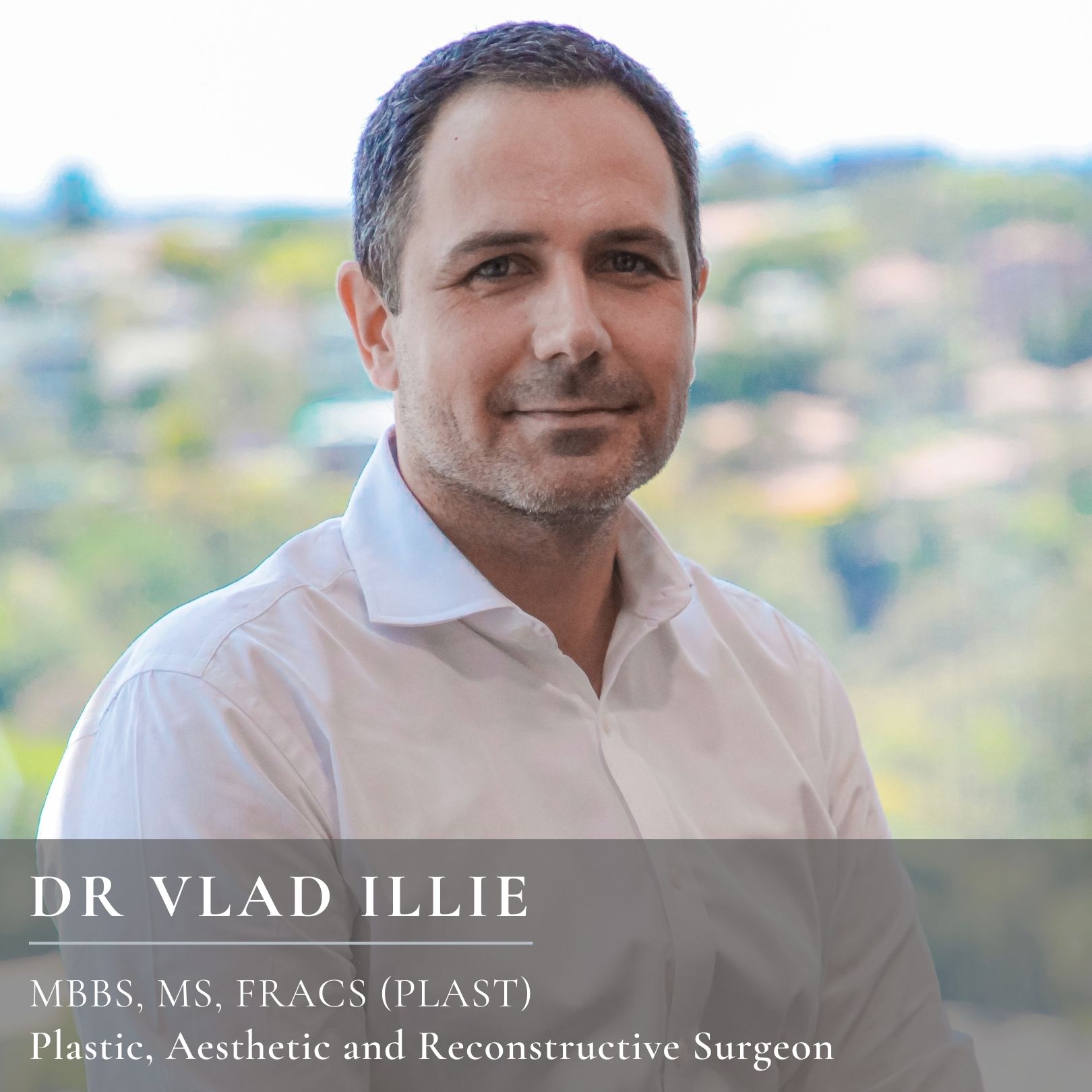
Dr Vlad ILLIE
Specialist Plastic and Reconstructive Surgeon
MBBS, MS, FRACS (plastic and reconstructive surgery)
AHPRA Registration Number MED0000966953
Dr Vlad ILLIE is a Sydney-based specialist plastic and reconstructive surgeon known for his meticulous surgical technique, patient‑centred philosophy, and commitment to natural, long‑term outcomes. With extensive experience across aesthetic and reconstructive surgery, he combines rigorous, research-led practice with a calm, thoughtful approach that supports patients through every stage of their surgical journey.
In addition to his operative work, patients can access a carefully chosen range of evidence-based non‑surgical treatments in his clinic, ensuring a cohesive and thoughtful pathway of care.
Ready to explore your options?
If you’re considering a procedure or simply want clarity on what suits you, starting with a conversation is the most helpful step. Our team offers thoughtful, personalised guidance to help you understand your options and your timing.
Read This Next
The Longevity Equation: How Long Results Actually Last, and What Determines It
Among the questions I am asked most consistently in consultation, one stands out for how often the answer disappoints patients hoping for a simpler response: how long will this actually last? The honest answer is almost always some variation of 'it depends,' and while...
Top 3 Cosmetic Surgery Procedures That Deliver the Most Natural Results
When people consider cosmetic surgery, one of the most common goals is to achieve results that look refined and natural — not overdone or artificial. My team and I focus on precision, balance, and anatomical harmony, ensuring that each cosmetic procedure complements...
Beauty, Autonomy, and Empowerment: 7 Feminist Takes on Cosmetic Surgery
Cosmetic surgery has often been portrayed in popular culture as a purely aesthetic pursuit, but the conversation is evolving. For many, plastic surgery is not just about appearance—the stories I hear in consultations are most often it’s about autonomy, personal...
Plastic Surgery Articles – Dr Vlad ILLIE in Sydney
Explore clear, clinically grounded guidance on contemporary plastic surgery and cosmetic medicine. Each piece offers practical information to help you understand modern techniques, treatment considerations, and the principles that shape contemporary aesthetic...
Breast Augmentation Surgery in Sydney
Breast augmentation (augmentation mammoplasty) is a surgical procedure that involves placing implants to increase breast size or improve breast shape. It addresses concerns such as changes in breast volume that may occur after pregnancy, weight fluctuations, or...
Arm Lift Surgery in Sydney
An arm lift (brachioplasty) is a surgical procedure that addresses changes in the upper arm appearance that can occur after significant weight loss, ageing, or other factors, such as loose skin, excess fat deposits, and reduced arm contour definition. The...
Schedule a Consultation
Ph (02) 9101 4707
Fax (02) 9182 0092
office@drvladillie.com.au
Sydney Centre for Plastic Surgery
Suite 1702, Westfield Tower 2
101 Grafton St
Bondi Junction NSW 2022
Central Coast Aesthetics
Suite 2, Albany St North
Gosford NSW 2250
Breast Augmentation Sydney, Breast Surgery Sydney, Boob job Sydney, Breast Implants Sydney Eastern Suburbs, Breast Enlargement Sydney, Breast Enhancement, Breast Enhancement Sydney, Breast implant surgeon Sydney, Silicone Implants, Motiva Implants – Dr Vlad ILLIE, plastic surgeon Sydney
Breast Reconstruction Surgery Sydney, Breast Cancer Reconstruction Sydney, Diep Flap Surgery, Reconstructive Surgery, Breast Reconstructive Surgery, Breast Surgery Post-Breast Cancer, Breast Surgery Post-Mastectomy – Dr Vlad ILLIE, plastic surgeon St Vincent’s Hospital Sydney
Mummy Makeover, Saggy Breasts Surgery, Breast Lift & Implant, Boob lift, Breast enlargement and lift, Breast enhancement Sydney, Breast surgery post-pregnancy, Breast surgery post-weight loss – Dr Vlad ILLIE, plastic surgeon St Vincent’s Hospital Sydney
Breast Augmentation Sydney, Breast Surgery Sydney, Boob job Sydney, Breast Implants Sydney Eastern Suburbs, Breast Enlargement Sydney, Breast Enhancement, Breast Enhancement Sydney, Breast implant Surgeon Sydney, Silicone Implants, Motiva Implants – Dr Vlad ILLIE, plastic surgeon
Breast Revision, Breast Surgery Sydney, Breast implant revision, Breast augmentation revision, Breast implant replacement, Breast Implant Reduction, Breast Implant Replacement, Surgery for botched breasts – Dr Vlad ILLIE, plastic surgeon
Tuberous breast surgery Sydney, tuberous breast correction Sydney, tuberous breasts, plastic surgeon Sydney, cosmetic surgeon Sydney, severe tuberous breasts, mild tuberous breast, Tuberomastoplasty, Lollypop Breast Lift – Dr Vlad ILLIE, plastic surgeon Sydney
Asian Breast Surgery Sydney, Asian breast implants, Asian scar healing breast implants, Asian breast reduction Sydney, Asian breast revision Sydney – Dr Vlad ILLIE, plastic surgeon Bondi Junction
Breast implant removal Sydney, Breast explant Sydney, breast implant removal surgery, breast implant removal plastic surgeon Sydney, BREAST IMPLANT EXPLANTATION SURGERY, removal of the breast implants, breast implant revision procedures performed, including removal of breast implants – Dr Vlad ILLIE, plastic surgeon Sydney