
“Am I just tired, or is it my eyelids?” It’s a question I hear constantly, and often the honest answer is both — heavy, hooded upper eyelids can genuinely make you look more tired than you feel, and in a lot of cases, make you feel more tired than you should, too. This isn’t just a cosmetic observation. Excess upper eyelid skin can have a real, measurable effect on how your eyes function day to day.
Beyond appearance
How Heavy Eyelids Actually Affect You
Many patients unconsciously raise their eyebrows all day to see clearly — and that constant effort is a genuine, common contributor to frontal headaches.
When there’s enough excess skin on the upper eyelid, it doesn’t just change your appearance — it can genuinely get in the way.
Vision
As excess skin hangs down over the eye, it can block the upper and outer parts of your field of vision. Patients often don’t notice this happening gradually, but describe it clearly once it’s pointed out — difficulty with peripheral awareness while driving, or needing to tilt the head back to read comfortably.
How This Shows Up Day to Day
Patients often don’t notice this happening gradually, since the brain compensates remarkably well for slowly progressive vision changes, but they describe it clearly once it’s pointed out: difficulty with peripheral awareness while driving, especially checking blind spots or noticing something approaching from the side; needing to tilt the head back or raise the chin to read comfortably; or a general sense that overhead lighting or the tops of doorways seem to require more conscious effort to see. A formal visual field test can measure this loss objectively, and is often the most convincing way for a patient to understand just how much their vision has actually been affected, since the change usually feels far more dramatic on paper than it did subjectively.
Comfort
Excess skin can push the eyelashes and lid margin down onto the surface of the eye, causing ongoing irritation, a foreign-body sensation, or excessive watering that many patients live with for years without connecting it to their eyelids at all — often assuming it’s simply dry eye or allergies.
Fatigue
A genuine, heavy, tired feeling in the eyes — especially by the end of the day — is one of the most common complaints linked to excess upper eyelid skin, separate from how the eyes actually look. This is thought to relate to the ongoing muscular effort involved in keeping the eyes open against the weight of the excess skin, which becomes more noticeable as the day progresses and muscles fatigue.
Headaches
This one surprises a lot of patients. When eyelid skin hangs low enough, many people unconsciously raise their eyebrows all day to compensate and keep their vision clear, engaging the frontalis muscle across the forehead almost constantly without realising it. That constant, low-level muscle effort is a genuine, recognised contributor to frontal headaches for some patients, and it’s not unusual for patients to report their headaches improving noticeably after surgery, once that compensatory effort is no longer needed.
Appearance
And yes, there’s the visual effect too — heavy upper lids can contribute to a tired, heavy or aged look, independent of how well-rested you actually are, which is often what first prompts someone to seek an assessment even when the functional symptoms have been present for years.
It's Often Not Just the Eyelid Skin
Excess upper eyelid skin frequently shows up alongside two related issues: ptosis (where the eyelid itself sits lower than it should, due to weakness or stretching of the muscle that lifts it, called the levator) and brow ptosis (where the eyebrow itself has descended from its youthful position). Because all three can contribute to the same cluster of symptoms — heaviness, vision restriction, compensatory eyebrow raising — a thorough assessment looks at all three together. Treating only the skin when ptosis or brow descent is also present tends to produce a less complete result, and in some cases can even make the compensatory eyebrow raising more noticeable rather than less, since the skin excess has been addressed but the underlying droop hasn’t.
What can help
Treatment options
Patients come to blepharoplasty for different reasons — for some it’s primarily about improving vision and comfort, for others it’s mainly about appearance, and for many it’s genuinely both.
Upper Blepharoplasty
This procedure removes the excess skin (and sometimes a small amount of underlying fat) from the upper eyelid. Depending on how much skin is affecting your vision, it may be assessed as a functional procedure rather than a purely cosmetic one, which is sometimes relevant for Medicare eligibility — a formal visual field test can help establish this.
How the Procedure Is Planned
The amount of skin removed is carefully measured and marked before surgery, using specific measurements from the eyelash line to the eyebrow, taking into account eyebrow position and how much skin needs to remain for the eye to close fully and comfortably afterward. Depending on how much skin is affecting your vision, it may be assessed as a functional procedure rather than a purely cosmetic one, which is sometimes relevant for Medicare eligibility — a formal visual field test, conducted with the eyelid taped up in its corrected position compared to its natural position, can help establish and document this functional impact.
Ptosis Repair
If the eyelid itself is drooping due to the muscle that lifts it, this is addressed separately from the skin excess, typically by tightening or reattaching the levator muscle’s attachment to the eyelid, often at the same time as blepharoplasty if both are present. Skipping this step when it’s genuinely needed is one of the more common reasons patients feel their results didn’t fully address their concerns.
Brow Lift
Where the eyebrow itself has descended, a brow lift may be recommended alongside eyelid surgery, since treating the eyelid skin alone won’t address a brow that’s genuinely sitting too low — and in some cases, removing eyelid skin without addressing a low brow can make the brow position look even more obvious afterward. Brow lifting can range from more minimally invasive approaches to a more traditional surgical lift, depending on the degree of correction needed.
What Patients Often Notice Afterward
- An improvement in upper and outer peripheral vision, for those whose vision was genuinely affected, often confirmed with a repeat visual field test.
- Less eye irritation, where lashes were previously rubbing on the eye surface.
- Reduced reliance on raising the eyebrows to see clearly, which some patients find eases frontal headaches significantly.
- A more open, alert and rested appearance to the eyes.
- Less end-of-day eye fatigue, for patients whose heaviness was related to the muscular effort of keeping the eyes open.
As with any surgical procedure, individual results and the degree of improvement vary, and a thorough assessment is the only way to know which of these outcomes are realistic for your specific situation.
After surgery
Recovery & Everyday Tips
- Expect some swelling and bruising in the first one to two weeks, settling gradually after that.
- Cool compresses in the first few days can help with comfort and swelling.
- Sun protection and sunglasses are particularly important on healing eyelid skin.
- Avoid rubbing your eyes or wearing contact lenses until you’ve been cleared to do so.
- Follow-up appointments matter — swelling can mask the final result in the early weeks, and functional improvements like vision are usually reassessed once healing has settled.
Frequently Asked Questions
How do I know if my heavy eyelids are actually affecting my vision, or just my appearance?
A formal visual field test can measure this objectively, comparing your vision with the eyelid in its natural position against its taped-up, corrected position. This is often used to establish whether the skin excess is genuinely restricting your upper or outer field of vision, and the results are frequently more dramatic than patients expect.
Could my headaches really be caused by my eyelids?
For some patients, yes. Constantly, unconsciously raising the eyebrows to compensate for heavy eyelid skin engages the forehead muscle almost all day, which is a recognised contributor to frontal headaches. Many patients report a noticeable improvement in headache frequency after surgery, once that compensatory effort is no longer needed.
Is upper blepharoplasty considered cosmetic or medical?
It can be either, depending on the degree of functional impact. Where vision is genuinely affected, as demonstrated by a visual field test, it may be assessed as a functional procedure with different eligibility considerations; otherwise it’s approached as an elective cosmetic one.
What’s the difference between heavy eyelid skin and ptosis?
Heavy eyelid skin is excess skin sitting on top of a normally positioned eyelid; ptosis is the eyelid itself sitting too low due to weakness in the muscle that lifts it (the levator). They often occur together and are assessed and treated separately, since addressing one without the other gives an incomplete result.
Will I need a brow lift as well as eyelid surgery?
Only if your eyebrows have genuinely descended (brow ptosis). Treating eyelid skin alone won’t correct a low brow, and in some cases can make a low brow position more noticeable — this is assessed carefully as part of a thorough examination before any surgery is planned.
How long does recovery from upper blepharoplasty take?
Initial swelling and bruising typically settle over one to two weeks, though this varies by individual and by whether ptosis repair or a brow lift was performed at the same time. We’ll give you a specific recovery timeline for your particular procedure.
Will this surgery change how my eyes look, or just how they function?
Both, generally. Most patients notice an improvement in appearance — a more open, alert look — alongside any functional benefit to vision, comfort or headaches, though the relative degree of each varies by individual starting point.
Is heavy eyelid skin hereditary, or does it just happen with age?
Both play a role — genetics influence how much skin and fat you have to begin with and how early changes appear, while age-related skin laxity adds to it progressively over time regardless of your starting anatomy.
Can Medicare help cover the cost if my vision is affected?
This depends on the outcome of a formal visual field assessment and your individual circumstances. It’s worth discussing directly with our team during consultation, as eligibility criteria and documentation requirements are specific.
At what point should I actually consider getting this assessed?
If you’re noticing eye fatigue, irritation, vision changes, or frequent frontal headaches — or simply feel your eyes look heavier than you feel — it’s a reasonable time for an assessment, regardless of age.
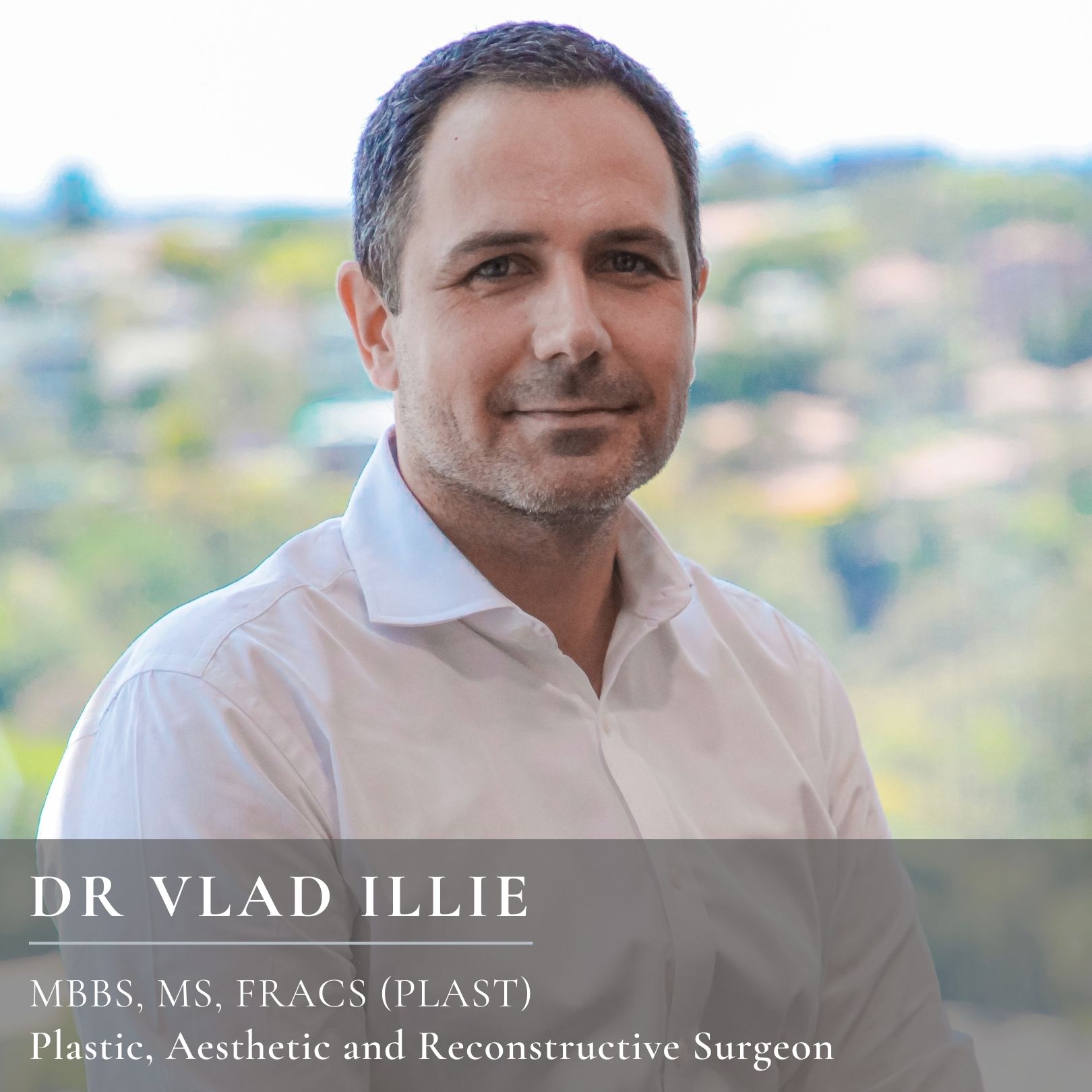
Dr Vlad ILLIE
Specialist Plastic and Reconstructive Surgeon
MBBS, MS, FRACS (plastic and reconstructive surgery)
AHPRA Registration Number MED0000966953
Dr Vlad ILLIE is a Sydney-based specialist plastic and reconstructive surgeon known for his meticulous surgical technique, patient‑centred philosophy, and commitment to natural, long‑term outcomes. With extensive experience across aesthetic and reconstructive surgery, he combines rigorous, research-led practice with a calm, thoughtful approach that supports patients through every stage of their surgical journey.
In addition to his operative work, patients can access a carefully chosen range of evidence-based non‑surgical treatments in his clinic, ensuring a cohesive and thoughtful pathway of care.
Ready to explore your options?
If you’re considering a procedure or simply want clarity on what suits you, starting with a conversation is the most helpful step. Our team offers thoughtful, personalised guidance to help you understand your options and your timing.
Read This Next
Scar Management After Surgery: A Surgeon’s Guide to Better Healing
Every surgical procedure leaves a scar. There's no way around that — it's simply how skin closes and heals. But there's a big difference between a scar that's left to do its own thing and one that's actively supported through the healing process, and patients often...
Sagging Mouth Corners: Why It Happens and What Can Help
“I don't feel sad or angry, but people keep asking if I'm okay.” I hear a version of this often, usually from patients noticing that the corners of their mouth have started to turn downward, giving their resting expression a look they don't feel on the inside. It's an...
Your Guide to In-Clinic Skin Rejuvenation Treatments
If you've ever searched "best anti-aging treatment" online, you'll know how confusing it gets. One week it's a new device, the next it's a serum promising to "erase" wrinkles overnight. As a specialist plastic and reconstructive surgeon, I sit down with patients every...
Plastic Surgery Articles – Dr Vlad ILLIE in Sydney
Explore clear, clinically grounded guidance on contemporary plastic surgery and cosmetic medicine. Each piece offers practical information to help you understand modern techniques, treatment considerations, and the principles that shape contemporary aesthetic...
Breast Augmentation Surgery in Sydney
Breast augmentation (augmentation mammoplasty) is a surgical procedure that involves placing implants to increase breast size or improve breast shape. It addresses concerns such as changes in breast volume that may occur after pregnancy, weight fluctuations, or...
Arm Lift Surgery in Sydney
An arm lift (brachioplasty) is a surgical procedure that addresses changes in the upper arm appearance that can occur after significant weight loss, ageing, or other factors, such as loose skin, excess fat deposits, and reduced arm contour definition. The...
Schedule a Consultation
Ph (02) 9101 4707
Fax (02) 9182 0092
office@drvladillie.com.au
Sydney Centre for Plastic Surgery
Suite 1702, Westfield Tower 2
101 Grafton St
Bondi Junction NSW 2022
Central Coast Aesthetics
Suite 2, Albany St North
Gosford NSW 2250
Breast reduction Sydney, Breast Reduction Surgery Sydney, Boob reduction, Breast Surgery, Breast reduction surgery, Breast surgery for back pain, Surgery for large breasts, Oversized breast surgery – Dr Vlad ILLIE, plastic surgeon Sydney
Breast Augmentation Sydney, Breast Surgery Sydney, Boob job Sydney, Breast Implants Sydney Eastern Suburbs, Breast Enlargement Sydney, Breast Enhancement, Breast Enhancement Sydney, Breast implant surgeon Sydney, Silicone Implants, Motiva Implants – Dr Vlad ILLIE, plastic surgeon Sydney
Breast Reconstruction Surgery Sydney, Breast Cancer Reconstruction Sydney, Diep Flap Surgery, Reconstructive Surgery, Breast Reconstructive Surgery, Breast Surgery Post-Breast Cancer, Breast Surgery Post-Mastectomy – Dr Vlad ILLIE, plastic surgeon St Vincent’s Hospital Sydney
Mummy Makeover, Saggy Breasts Surgery, Breast Lift & Implant, Boob lift, Breast enlargement and lift, Breast enhancement Sydney, Breast surgery post-pregnancy, Breast surgery post-weight loss – Dr Vlad ILLIE, plastic surgeon St Vincent’s Hospital Sydney
Breast Augmentation Sydney, Breast Surgery Sydney, Boob job Sydney, Breast Implants Sydney Eastern Suburbs, Breast Enlargement Sydney, Breast Enhancement, Breast Enhancement Sydney, Breast implant Surgeon Sydney, Silicone Implants, Motiva Implants – Dr Vlad ILLIE, plastic surgeon
Breast Revision, Breast Surgery Sydney, Breast implant revision, Breast augmentation revision, Breast implant replacement, Breast Implant Reduction, Breast Implant Replacement, Surgery for botched breasts – Dr Vlad ILLIE, plastic surgeon
Tuberous breast surgery Sydney, tuberous breast correction Sydney, tuberous breasts, plastic surgeon Sydney, cosmetic surgeon Sydney, severe tuberous breasts, mild tuberous breast, Tuberomastoplasty, Lollypop Breast Lift – Dr Vlad ILLIE, plastic surgeon Sydney
Asian Breast Surgery Sydney, Asian breast implants, Asian scar healing breast implants, Asian breast reduction Sydney, Asian breast revision Sydney – Dr Vlad ILLIE, plastic surgeon Bondi Junction
Breast implant removal Sydney, Breast explant Sydney, breast implant removal surgery, breast implant removal plastic surgeon Sydney, BREAST IMPLANT EXPLANTATION SURGERY, removal of the breast implants, breast implant revision procedures performed, including removal of breast implants – Dr Vlad ILLIE, plastic surgeon Sydney