
If you’ve ever searched “best anti-aging treatment” online, you’ll know how confusing it gets. One week it’s a new device, the next it’s a serum promising to “erase” wrinkles overnight. As a specialist plastic and reconstructive surgeon, I sit down with patients every week who are simply trying to cut through the noise and understand what’s actually worth their time.
So that’s what this guide is for. No hype, no miracle claims — just a straightforward look at the in-clinic treatments I most commonly discuss with patients, what they can realistically help with, and how they fit into a broader skin health plan.
A quick but important note before we dive in: this article is general information, not medical advice, and it isn’t a substitute for seeing us in person. Everyone’s skin is different, and what’s right for one person may not be right for you. Results also vary from patient to patient, and nothing here is a guarantee of outcome. The best way to know what will genuinely work for your skin is a proper consultation, where we can look at your skin, talk through your goals, and build a plan together.
One thing I always tell patients: no treatment, however advanced, replaces the basics — daily sun protection, a skincare routine suited to your skin, and realistic expectations. Think of in-clinic treatments as a way to support and enhance that foundation, not replace it. And part of my job isn’t just recommending treatments — it’s also being honest when a treatment isn’t the right fit, or when a more considered approach would serve you better.
With that in mind, here’s an easy-to-follow overview of the treatments we most often talk about with patients seeking non-surgical skin rejuvenation.
Treatments We Commonly Discuss for Skin Rejuvenation
Microneedling with Specialised Clinical Serums and Exosomes
Can help with: skin texture, fine lines, mild scarring, overall skin quality
Microneedling works exactly like it sounds — a device with very fine, sterile needles creates tiny, controlled channels in your skin. It sounds intense, but it’s a well-tolerated treatment that simply kick-starts your skin’s own healing response, encouraging it to produce more collagen and elastin, the proteins that keep skin firm and supported.
Here’s a helpful bit of biology: those tiny channels also make your skin much better at absorbing what you put on it afterwards. That’s why we pair microneedling with specialised clinical-grade serums, and in some cases, exosome-based topical formulations, applied straight after treatment. Exosomes are a newer, exciting area of skin science — they’re cell-derived particles being studied for how they may support the skin’s natural repair processes. We’re genuinely excited about the early results, but it’s worth being upfront: the research is still developing. We see exosomes as a valuable addition to microneedling, rather than a stand-alone treatment with fully proven results on its own — and we’re always happy to talk you through where the science currently sits.
Like most good skin treatments, this isn’t a one-and-done process. You’ll usually need a course of sessions, spaced around four to six weeks apart, before you start noticing real changes in texture. Everyone’s skin responds a little differently, so we’ll never promise a specific result — but we will give you an honest sense of what’s realistic for you.
What’s good to know:
- Supports your skin’s own collagen-building process
- Can improve the look of texture and mild scarring over a course of treatments
- Minimal downtime compared to more invasive options
- Works well on both the face and neck
- Not right for everyone — active acne, certain skin conditions, and some medications can affect suitability
If you’re after a bit more, we also offer radiofrequency-assisted microneedling, which adds a controlled dose of thermal energy to the treatment. We use this thoughtfully and selectively, because too much heat can affect the deeper fat layer of the face — and that layer is exactly what gives your face its natural, supported shape. Protecting it matters just as much as treating the surface.
Chemical Peels: A Simple Way to Refresh Dull, Uneven Skin
Can help with: uneven skin tone, dullness, mild pigmentation, fine lines
A chemical peel does exactly what it says — a solution is applied to your skin to gently remove the outer, often sun-damaged layer of cells. It sounds dramatic, but it’s a well-established way to encourage fresher skin to come through, which can leave your complexion looking smoother and more even.
Lighter peels — think glycolic, salicylic or lactic acid — are gentle enough to fit into an ongoing skincare routine, with little to no downtime. Deeper peels go further and can tackle more noticeable concerns, but they also mean a longer recovery, so we only recommend these after carefully assessing your skin type and history.
What’s good to know:
- Can leave skin looking brighter and more even
- May help fade surface pigmentation and sun-related discolouration
- Usually delivered as a course, tailored to your specific skin
- Peel strength is chosen for you, not one-size-fits-all
Laser Treatments: Targeted Help for Pigmentation and Texture
Can help with: sun damage, pigmentation, skin texture, some visible signs of ageing
“Laser” isn’t one treatment — it’s a whole family of technologies, and the right one depends entirely on what we’re trying to fix. Broadly, they fall into two camps: non-ablative (gentler, non-invasive) and ablative (more intensive) devices.
Non-ablative treatments, like Intense Pulsed Light (IPL) or Broadband Light (BBL), work beneath the skin’s surface to target pigment and small blood vessels, without removing the top layer of skin. These usually need a series of sessions, but downtime is minimal — a popular choice for sun damage, redness, and uneven pigmentation.
Ablative lasers, such as fractionated CO2 or Erbium YAG, are a different story. These create a controlled injury to the surface of the skin to trigger a deeper remodelling response underneath. They’re more intensive, need a longer recovery, and we tend to reserve them for more significant concerns, like deeper texture issues or pronounced sun damage. Whether laser is right for you at all — and which type — comes down to a proper look at your skin type, history, and goals.
What’s good to know:
- The right device is chosen for you — there’s no generic “one laser fits all”
- Non-ablative options mean less downtime, but usually more sessions
- Ablative options are stronger, with longer recovery, and used more selectively
- All laser treatments carry risks worth discussing openly, including pigment changes in some skin types
Whatever laser treatment you have, your skincare routine still matters afterwards. The right ingredients help protect your results and reduce the chance of pigmentation returning, so we’ll always talk about your at-home routine as part of the bigger picture — not just the laser session on its own.
Anti-Wrinkle Injections: Softening Expression Lines
Can help with: dynamic lines like forehead lines, frown lines and crow’s feet
You’ve probably heard a lot about anti-wrinkle injections already, so here’s the honest version. This treatment uses a prescription-only muscle-relaxing medicine to temporarily calm the small facial muscles behind repeated expressions — frowning, squinting, that sort of thing. Over the years, those repeated movements can etch lines into the skin that stay visible even when your face is relaxed. By easing that repetitive muscle activity, this treatment can help soften the look of those lines.
Because it’s a Schedule 4 prescription medicine, it can only be prescribed and given after an individual, in-person consultation, where we properly assess your suitability, history and goals. We’re also not able to make specific promotional claims about this medicine — that’s simply the law around prescription medicines in Australia — so we’d rather have an honest, thorough conversation with you in person about what to expect, including any risks, than make promises in an article.
What’s good to know:
- Needs a prescription and a proper consultation — never a walk-in, off-the-shelf treatment
- Best suited to softening dynamic expression lines, not deep, static wrinkles
- Effects are temporary and vary from person to person
- Should only ever be given by an appropriately qualified, experienced practitioner
Skin Boosting Treatments: Hydration From the Inside Out
Can help with: overall hydration, mild skin laxity, general skin quality and glow
Lately, we’ve had a lot more patients asking about “skin boosters” — and it’s easy to see why. These are injectable treatments designed to support your skin’s underlying hydration and quality, rather than adding significant volume or reshaping your face the way dermal fillers do. Rejuran and other skin boosting options fall into this category, each using slightly different technology, but all working towards the same goal: healthier, better-hydrated skin from within.
These treatments are usually given as a series, spaced some weeks apart, and we often pair them with other treatments in this guide — microneedling or facials, for example — as part of a broader skin quality plan. As with any injectable treatment, we’ll walk you through what’s realistic for your skin specifically. Responses vary from person to person, and we won’t promise a particular result before we’ve properly assessed you.
What’s good to know:
- Focused on hydration and skin quality, not adding volume
- Usually done as a course, not a single visit
- Often combined with other treatments for a broader effect
- Requires an assessment with a qualified practitioner to check it’s right for you
Dermal Fillers: Restoring Volume, Thoughtfully
Can help with: localised volume loss, hollow temples, lip enhancement, selected contour concerns
Dermal fillers, usually made from hyaluronic acid, are used to restore volume in specific areas of the face, or to enhance certain features, like the lips. I tend to think of filler as a precision tool, not a broad-brush solution — great for a hollow temple, some lost volume under the eyes, fuller lips, or a bit of refinement to the chin.
Here’s the thing though: as we age, volume loss tends to spread and comes hand in hand with a genuine loss of skin and tissue support. In that situation, filler on its own often can’t recreate a natural look, and adding more and more to compensate can end up distorting the face rather than refreshing it. That’s why I take a conservative approach — and honestly, sometimes the right recommendation for a patient is a different treatment altogether, or even a conversation about surgical options, rather than simply adding more filler.
What’s good to know:
- Best used for targeted volume restoration, not broad facial rejuvenation
- Hyaluronic acid fillers can usually be dissolved if needed
- Effects are temporary and vary by person and treatment area
- Less is often more — a conservative approach tends to age better than over-correction
- A full consultation helps us work out whether filler is genuinely the right fit for you, or whether something else would serve you better
Professional Facials: Simple, Reliable Skin Maintenance
Can help with: general maintenance, hydration, gentle exfoliation, congestion
Facials are the gentlest treatment on this list, and that’s exactly the point — they’re here to support everything else, not replace it. A good facial cleanses more thoroughly than your daily routine can, gently exfoliates, and, depending on the technique, helps restore hydration back into your skin.
In our clinic, we offer MicroHydra-LIFT®, which combines gentle mechanical exfoliation with an infusion of hydrating, nourishing solutions into the skin. It’s designed to leave your skin feeling refreshed and genuinely more hydrated. Many patients choose it as an easy, low-downtime option for regular upkeep, or as a companion to more corrective treatments like microneedling or peels.
What’s good to know:
- The lowest-downtime treatment on this list
- Designed to support, not replace, more corrective treatments
- Can be tailored to your specific skin concerns
- A great option for regular maintenance between other treatments
The Foundation Still Matters Most
Here’s the truth every good skin plan comes back to: none of the treatments above matter much without the basics in place. Two habits do more heavy lifting than anything else:
- Daily sun protection. Cumulative sun exposure is one of the biggest contributors to visible skin ageing. A good sunscreen, worn every day, is one of the simplest and most effective things you can do for your skin.
- A skincare routine that’s actually right for you. The right actives, used consistently and matched to your skin type, support everything else you do — before, during and after any in-clinic treatment.
Building a Plan That's Actually Right for You
There’s no single treatment that suits everyone, and honestly, part of my job is helping you figure out what’s genuinely worth doing for your skin — and just as importantly, what isn’t. A good plan usually starts small and conservative, with an honest conversation about what’s realistic, and then adjusts over time based on how your skin responds.
If any of this has struck a chord, the best next step is simply a consultation. That’s where we can properly look at your skin, talk through what you’re hoping to achieve, and put together a plan that’s built around you — not a generic list of treatments. As always, results vary from person to person, and every treatment, surgical or non-surgical, carries risks worth understanding before you go ahead.
Frequently Asked Questions
How do I know which treatment is right for me?
Honestly, the only reliable way is a proper consultation. Your skin, goals and medical history all play a part, and what works well for one person may not be the right fit for you. We’ll always talk you through the options and be upfront about what’s realistic before recommending anything.
How many sessions will I need?
It depends on the treatment and what we’re addressing. Most of the treatments in this guide — microneedling, peels, laser, skin boosters — are delivered as a course rather than a single visit, because skin responds gradually over time. Anti-wrinkle injections and dermal fillers are usually done as single sessions, though results are temporary and may need topping up over time. We’ll give you a clearer idea of what to expect once we’ve assessed your skin.
Is there any downtime?
It varies quite a bit by treatment. Facials and lighter chemical peels typically involve little to no downtime. Microneedling, skin boosters and non-ablative laser treatments may involve some redness for a day or two. More intensive treatments, like ablative laser, involve a longer recovery period. We’ll always talk you through exactly what to expect for the specific treatment you’re considering.
Are these treatments painful?
Most patients describe these treatments as mildly uncomfortable rather than painful, and numbing options are often available where appropriate. Everyone’s pain tolerance is different, though, so we’re happy to talk through what to expect for any treatment you’re considering.
Can treatments be combined?
Often, yes. Many patients combine treatments — for example, microneedling alongside a skin booster, or a facial between other, more corrective treatments. That said, combining treatments isn’t automatically the right approach for everyone, and we’ll only recommend combinations that make sense for your skin and goals.
What's the difference between skin boosters and dermal fillers?
Skin boosters, like Rejuran and other skin boosting options, are designed to support your skin’s hydration and overall quality. Dermal fillers are used to restore volume in specific areas or enhance particular features. They’re not interchangeable — which one (or both) is right for you depends on what you’re trying to address, and that’s something we work out together during a consultation.
Are anti-wrinkle injections and dermal fillers safe?
Like any medical treatment, they carry some risks, which is exactly why they should only be administered by an appropriately qualified, experienced practitioner following a proper consultation. Anti-wrinkle injections are a Schedule 4 prescription medicine and can only be prescribed after an individual assessment. We’ll always discuss the specific risks relevant to you before proceeding with any treatment.
How soon will I see results?
This depends entirely on the treatment. Some, like anti-wrinkle injections or dermal fillers, show visible changes within days to a couple of weeks. Others, like microneedling, peels or skin boosters, work more gradually over a course of sessions. We won’t promise a specific timeline before we’ve assessed your skin, but we’ll always give you an honest, realistic expectation.
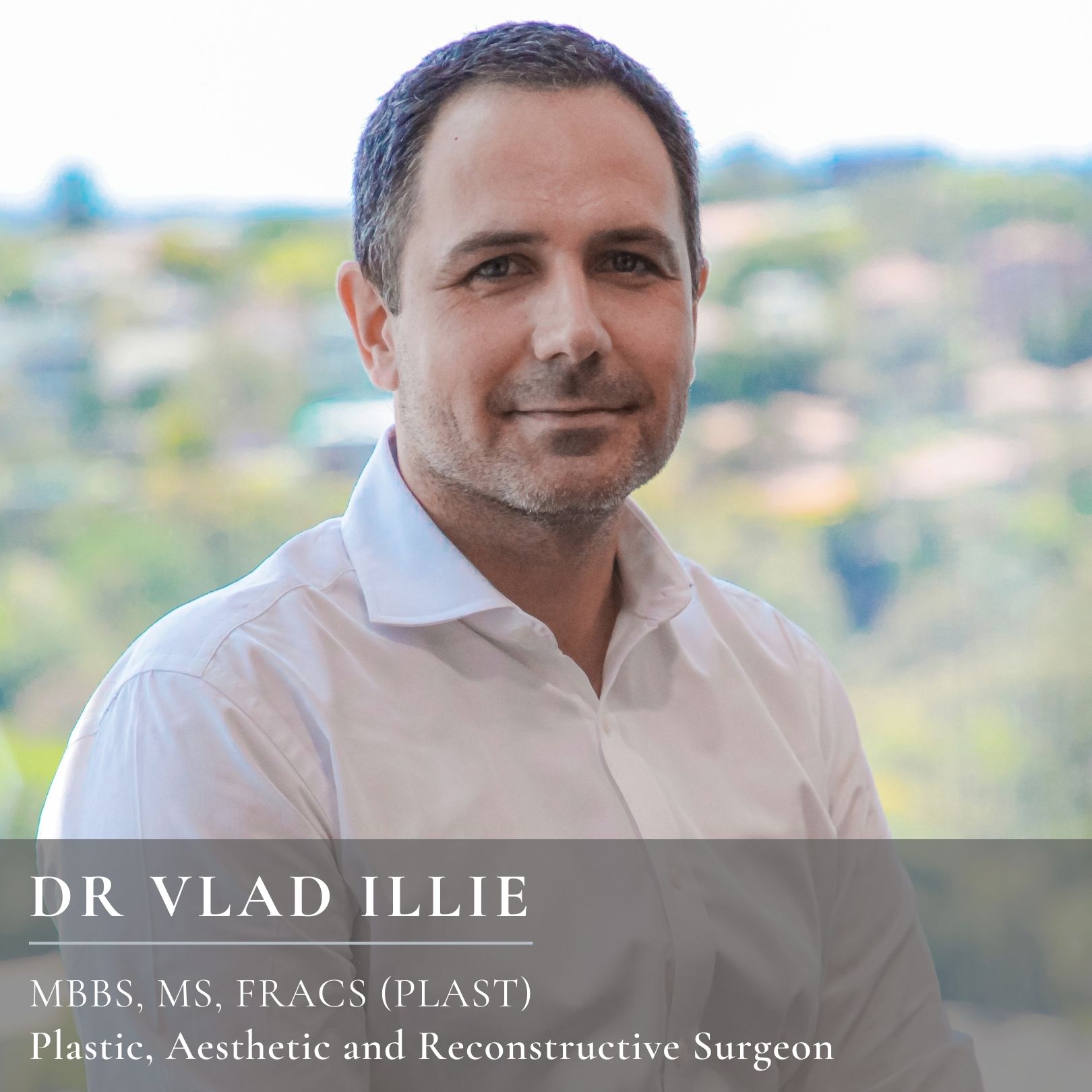
Dr Vlad ILLIE
Specialist Plastic and Reconstructive Surgeon
MBBS, MS, FRACS (plastic and reconstructive surgery)
AHPRA Registration Number MED0000966953
Dr Vlad ILLIE is a Sydney-based specialist plastic and reconstructive surgeon known for his meticulous surgical technique, patient‑centred philosophy, and commitment to natural, long‑term outcomes. With extensive experience across aesthetic and reconstructive surgery, he combines rigorous, research-led practice with a calm, thoughtful approach that supports patients through every stage of their surgical journey.
In addition to his operative work, patients can access a carefully chosen range of evidence-based non‑surgical treatments in his clinic, ensuring a cohesive and thoughtful pathway of care.
Ready to explore your options?
If you’re considering a procedure or simply want clarity on what suits you, starting with a conversation is the most helpful step. Our team offers thoughtful, personalised guidance to help you understand your options and your timing.
Read This Next
Understanding Pigmentation: The 5 Skin Concerns I See Most Often in Clinic
Sun spots, melasma, dark marks after acne, freckles, dark circles — they can look similar on the surface but come from very different places. Here's how I tell them apart, and what genuinely helps.Pigmentation is, by a wide margin, the concern I'm asked about most in...
Invisible Transformations: The Aesthetic Changes No One Names, But Everyone Notices
There is a particular kind of comment I hear often in consultation: 'She looks wonderful, but I can't say why.' It is usually offered about a friend, a colleague, or a public figure who has undergone some form of aesthetic refinement — and the inability to name the...
Age 40 vs 50 vs 60: How Ageing Changes Direction, Not Just Degree
One of the more persistent misconceptions I encounter in consultation is the idea that ageing is a single, linear process — that a woman at 60 is simply experiencing 'more' of whatever a woman at 40 is experiencing, in greater quantity. Clinically, this is not...
Plastic Surgery Articles – Dr Vlad ILLIE in Sydney
Explore clear, clinically grounded guidance on contemporary plastic surgery and cosmetic medicine. Each piece offers practical information to help you understand modern techniques, treatment considerations, and the principles that shape contemporary aesthetic...
Breast Augmentation Surgery in Sydney
Breast augmentation (augmentation mammoplasty) is a surgical procedure that involves placing implants to increase breast size or improve breast shape. It addresses concerns such as changes in breast volume that may occur after pregnancy, weight fluctuations, or...
Arm Lift Surgery in Sydney
An arm lift (brachioplasty) is a surgical procedure that addresses changes in the upper arm appearance that can occur after significant weight loss, ageing, or other factors, such as loose skin, excess fat deposits, and reduced arm contour definition. The...
Schedule a Consultation
Ph (02) 9101 4707
Fax (02) 9182 0092
office@drvladillie.com.au
Sydney Centre for Plastic Surgery
Suite 1702, Westfield Tower 2
101 Grafton St
Bondi Junction NSW 2022
Central Coast Aesthetics
Suite 2, Albany St North
Gosford NSW 2250
Breast reduction Sydney, Breast Reduction Surgery Sydney, Boob reduction, Breast Surgery, Breast reduction surgery, Breast surgery for back pain, Surgery for large breasts, Oversized breast surgery – Dr Vlad ILLIE, plastic surgeon Sydney
Breast Augmentation Sydney, Breast Surgery Sydney, Boob job Sydney, Breast Implants Sydney Eastern Suburbs, Breast Enlargement Sydney, Breast Enhancement, Breast Enhancement Sydney, Breast implant surgeon Sydney, Silicone Implants, Motiva Implants – Dr Vlad ILLIE, plastic surgeon Sydney
Breast Reconstruction Surgery Sydney, Breast Cancer Reconstruction Sydney, Diep Flap Surgery, Reconstructive Surgery, Breast Reconstructive Surgery, Breast Surgery Post-Breast Cancer, Breast Surgery Post-Mastectomy – Dr Vlad ILLIE, plastic surgeon St Vincent’s Hospital Sydney
Mummy Makeover, Saggy Breasts Surgery, Breast Lift & Implant, Boob lift, Breast enlargement and lift, Breast enhancement Sydney, Breast surgery post-pregnancy, Breast surgery post-weight loss – Dr Vlad ILLIE, plastic surgeon St Vincent’s Hospital Sydney
Breast Augmentation Sydney, Breast Surgery Sydney, Boob job Sydney, Breast Implants Sydney Eastern Suburbs, Breast Enlargement Sydney, Breast Enhancement, Breast Enhancement Sydney, Breast implant Surgeon Sydney, Silicone Implants, Motiva Implants – Dr Vlad ILLIE, plastic surgeon
Breast Revision, Breast Surgery Sydney, Breast implant revision, Breast augmentation revision, Breast implant replacement, Breast Implant Reduction, Breast Implant Replacement, Surgery for botched breasts – Dr Vlad ILLIE, plastic surgeon
Tuberous breast surgery Sydney, tuberous breast correction Sydney, tuberous breasts, plastic surgeon Sydney, cosmetic surgeon Sydney, severe tuberous breasts, mild tuberous breast, Tuberomastoplasty, Lollypop Breast Lift – Dr Vlad ILLIE, plastic surgeon Sydney
Asian Breast Surgery Sydney, Asian breast implants, Asian scar healing breast implants, Asian breast reduction Sydney, Asian breast revision Sydney – Dr Vlad ILLIE, plastic surgeon Bondi Junction
Breast implant removal Sydney, Breast explant Sydney, breast implant removal surgery, breast implant removal plastic surgeon Sydney, BREAST IMPLANT EXPLANTATION SURGERY, removal of the breast implants, breast implant revision procedures performed, including removal of breast implants – Dr Vlad ILLIE, plastic surgeon Sydney