
Aesthetic conversation, both in public discourse and among friends, tends to concentrate on a relatively narrow set of treatments — the ones photographed, discussed on social media, or featured prominently in marketing. Yet a considerable portion of the treatment I discuss in consultation falls well outside this narrow spotlight: concerns that patients raise quietly, often after some hesitation, and treatments pursued with particular discretion, precisely because they touch on aspects of appearance or bodily change that carry a degree of social sensitivity or personal privacy.
I refer to these, collectively, as silent procedures — not because they are rare, but because they are rarely discussed openly, despite being considered and pursued by a meaningful proportion of patients. These include concerns such as hand rejuvenation, excess sweating (hyperhidrosis) management, scar revision, certain body contouring procedures addressing concerns patients describe as embarrassing, and treatments for conditions like gynecomastia in a male partner or family member that a patient may be researching on someone else’s behalf.
The silence surrounding these procedures is understandable — many touch on areas of the body or aspects of function that carry inherent privacy — but it can also leave patients feeling isolated in concerns that are, in clinical reality, quite common. Part of my purpose in raising these topics directly is to normalise the fact that these conversations happen regularly in consulting rooms, even if they happen rarely elsewhere.
This article discusses several of these less publicly discussed concerns, the physiological or anatomical basis for each, the treatment approaches available, and the particular ethical and psychological considerations that apply when discretion itself is a significant part of what a patient is seeking.
It is worth stating clearly that raising these topics is not an encouragement toward treatment; many patients who discuss these concerns in consultation ultimately choose not to proceed, once they better understand the normal range of anatomical variation or the non-surgical options available. The purpose of open, accurate information is to support whatever decision genuinely serves the individual, including the decision not to treat at all.
Scientific Background
Understanding Less Discussed Concerns
Several of the concerns falling under this category have genuine anatomical or physiological bases worth understanding, separate from the discretion that often surrounds their discussion.
Hand Ageing
The hands are subject to many of the same ageing processes affecting the face — volume loss, skin thinning, and cumulative sun exposure — but often receive considerably less preventative attention, such as consistent sunscreen application, than the face does. This can result in a visible discrepancy between facial and hand appearance that some patients find noticeable and wish to address, particularly given how frequently hands are visible in daily social and professional interaction.
Excess Sweating (Hyperhidrosis)
Hyperhidrosis, or excessive sweating beyond what is required for normal thermoregulation, affects a meaningful proportion of the population and can occur in the underarms, palms, soles or elsewhere. It arises from overactivity of the sweat glands, sometimes without a clearly identifiable underlying cause (primary hyperhidrosis), and can have a significant impact on daily comfort and confidence, despite rarely being discussed openly.
Scars
Scars form as part of the body’s natural wound-healing process, and their eventual appearance is influenced by factors including wound depth, tension across the healing site, individual healing tendency, and infection during the healing period. Some patients experience scarring that is more pronounced than typical, whether from surgery, injury or conditions such as acne, and seek treatment to improve its appearance.
Gynecomastia
While this article is written primarily for women, this concern is frequently raised by patients on behalf of a male partner or family member, so it is worth including. Gynecomastia refers to enlargement of male breast tissue, arising from a hormonal imbalance between oestrogen and testosterone, and can occur for a range of reasons including puberty, certain medications, and other underlying health conditions that warrant medical assessment before any aesthetic treatment is considered.
Several factors contribute to the relative silence surrounding this category of concern. Some relate to areas of the body governed by social norms around modesty or privacy; others relate to a perception, not always accurate, that a given concern is unusual or embarrassing, when clinically it is quite common. Still others relate to the fact that these concerns often affect function or comfort as much as appearance, occupying a space between purely cosmetic and purely medical concern that can be harder to discuss casually than a more clearly cosmetic topic. Recognising these underlying reasons can help patients feel less alone in any hesitation they may feel about raising a similar concern themselves.
Treatment Options
Addressing Silent Concerns
As with more publicly discussed treatments, options for these concerns range from conservative topical or non-invasive measures through to surgical intervention, and suitability depends on the specific concern, its severity, and individual patient factors.
Hand Rejuvenation
- Topical treatment: consistent sun protection and pigmentation-targeted topical agents, as discussed in our dedicated article on pigmentation, may help address sun spots on the hands.
- Fat Transfer to Hands or Dermal filler: volumising treatments may help address the appearance of prominent tendons and veins associated with volume loss in the back of the hands.
- Laser and light-based treatments: these may help address pigmentation and skin texture on the hands, similar to facial applications discussed elsewhere in this series.
Hyperhidrosis Management
- Clinical-strength topical antiperspirants: often considered as a first-line measure before more involved treatment is explored.
- Neuromodulator injections: this treatment category, more commonly associated with facial lines, may also be used to temporarily reduce the activity of sweat glands in areas such as the underarms, with effects that diminish gradually over a period of months, similar to their facial application.
- Iontophoresis: a device-based treatment sometimes used for palm or sole hyperhidrosis, involving a mild electrical current passed through water to temporarily reduce sweat gland activity.
- Referral for underlying assessment: because hyperhidrosis can occasionally relate to an underlying medical condition, a general practitioner assessment is a reasonable first step before pursuing targeted aesthetic treatment.
Scar Revision
Options for improving the appearance of scarring may include silicone-based topical treatments, corticosteroid injections for certain raised scars, laser treatment to address colour or texture, and, in some cases, surgical revision for scars that have healed with significant tension or irregularity. Timing matters considerably in scar treatment, as scars continue to mature and often improve naturally over a period of twelve to eighteen months following the original injury, meaning premature intervention may not always be necessary or advisable.
Gynecomastia Treatment
Following appropriate medical assessment to rule out or address any underlying hormonal cause, treatment options may include surgical removal of excess glandular tissue, sometimes combined with liposuction to address surrounding fatty tissue, depending on the specific presentation.
The Importance of Practitioner Experience in Sensitive Areas
For treatments in this category, practitioner experience specific to the relevant anatomical area is particularly important, given both the technical nuance involved and the heightened sensitivity many patients feel. Patients are encouraged to ask directly about a practitioner’s specific experience and training in the relevant procedure, and should feel entitled to seek a second opinion or a different practitioner if they do not feel sufficiently comfortable or confident in the initial consultation, without any sense of obligation to proceed simply because an initial conversation has taken place.
Lifestyle & Holistic Factors
Everyday Support
Lifestyle considerations relevant to these less-discussed concerns vary by presentation, but several general principles apply broadly.
Sun Protection Beyond the Face
Extending sun protection habits to the hands and other frequently exposed areas, not just the face, may help prevent or slow the progression of pigmentary and textural changes that often go unaddressed simply because they receive less routine attention.
Clothing and Fabric Choices for Hyperhidrosis
For patients managing hyperhidrosis, breathable, natural fabrics and moisture-wicking clothing may help manage daily comfort alongside any clinical treatment pursued, and are a reasonable, low-cost complement to more targeted intervention.
Postpartum Considerations
For women considering treatment related to changes following childbirth, allowing adequate time for the body’s natural postpartum recovery and hormonal stabilisation, generally at least twelve months, is typically advised before considering aesthetic treatment for concerns that may resolve or improve naturally during this period.
Scar Care During Healing
For patients managing scarring, consistent sun protection over the healing scar, avoidance of tension on the healing wound where possible, and early, gentle scar massage once a wound has sufficiently closed (as advised by a treating practitioner) may support more favourable natural healing before any further intervention is considered.
General Health Screening
For several of the concerns discussed in this article, particularly hyperhidrosis and gynecomastia, an underlying general health assessment is a sensible first step, as both can, in some instances, relate to broader hormonal or metabolic factors that are worth understanding before pursuing targeted aesthetic treatment. A general practitioner is well placed to conduct this initial assessment and provide referral to a specialist where appropriate.
Frequently Asked Questions
Do these concerns always require surgical treatment?
No. Many, such as early hand pigmentation or mild hyperhidrosis, respond well to topical or non-surgical measures. Severity, individual anatomy and personal priorities all factor into what is appropriate for a given patient.
How is my privacy specifically protected during consultation and treatment?
Discretion extends beyond the consultation room itself — to how appointments are scheduled, how medical records are stored, and how the entire clinical team is trained to handle sensitive information. This is treated as a core component of care, not an afterthought.
What if I’m researching a concern on behalf of a partner or family member?
The person actually receiving treatment ultimately needs to engage directly with the consultation process themselves, to ensure their own informed consent and genuine comfort with any decision made, rather than treatment being arranged entirely by a third party.
Can excessive sweating be a sign of an underlying medical condition?
Occasionally, yes, though it often occurs without a clearly identifiable underlying cause (primary hyperhidrosis). A general practitioner assessment is a reasonable first step to rule out or identify any underlying contributing factor before pursuing targeted aesthetic treatment.
How long should I wait after childbirth before considering treatment for related changes?
Allowing adequate time for the body’s natural postpartum recovery and hormonal stabilisation — generally at least twelve months — is typically advised before considering aesthetic treatment for concerns that may resolve or improve naturally during this period.
When is the right time to treat a scar, and can treating it too early cause problems?
Scars continue to mature and often improve naturally over twelve to eighteen months following the original injury. Premature intervention is not always necessary or advisable, and timing is an important part of appropriate scar management.
How do I find a practitioner with genuine experience in these more specialised areas?
It is reasonable, and encouraged, to ask directly about a practitioner’s specific training and experience in the relevant procedure. You should feel entitled to seek a second opinion or a different practitioner if you do not feel sufficiently confident after an initial consultation.
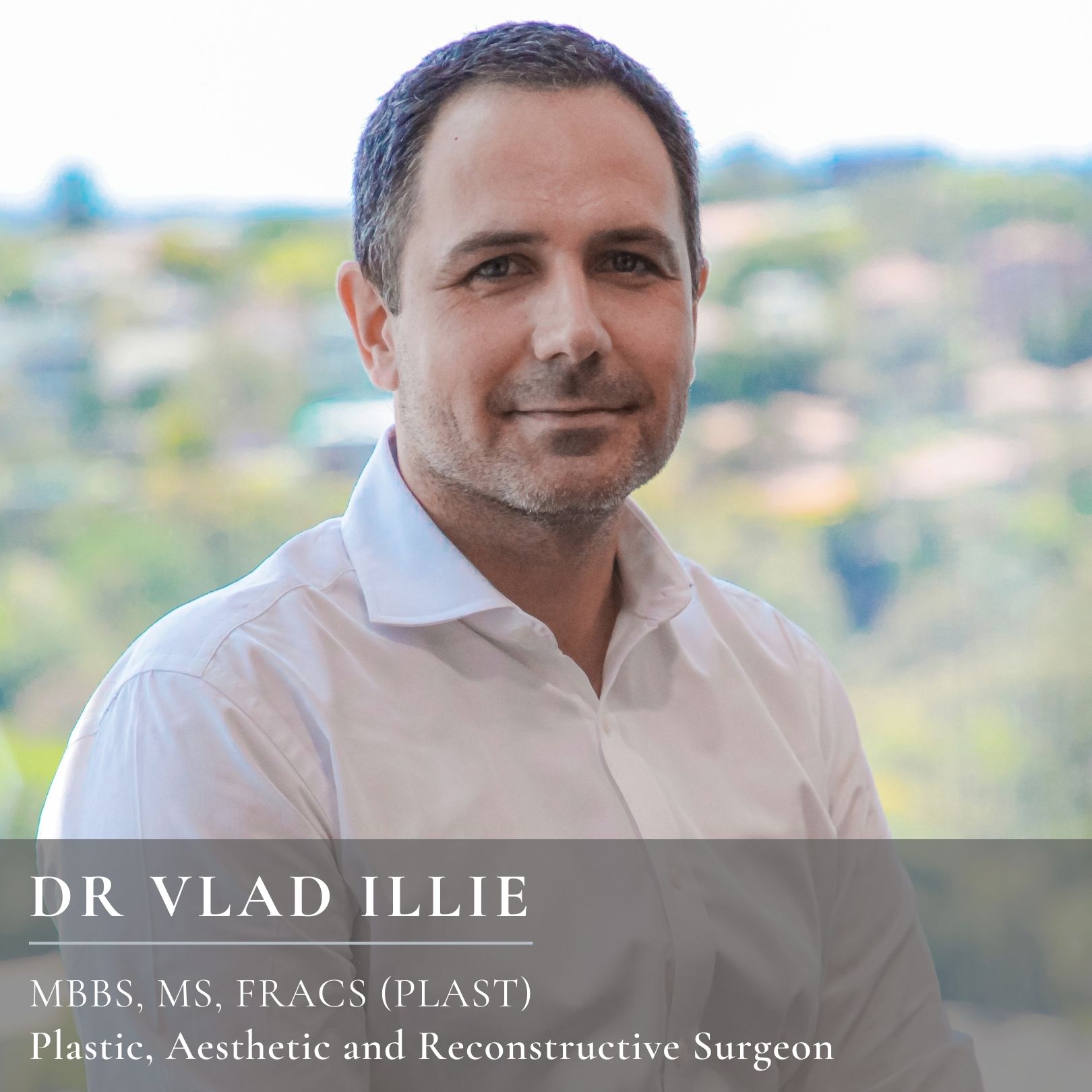
Dr Vlad ILLIE
Specialist Plastic and Reconstructive Surgeon
MBBS, MS, FRACS (plastic and reconstructive surgery)
AHPRA Registration Number MED0000966953
Dr Vlad ILLIE is a Sydney-based specialist plastic and reconstructive surgeon known for his meticulous surgical technique, patient‑centred philosophy, and commitment to natural, long‑term outcomes. With extensive experience across aesthetic and reconstructive surgery, he combines rigorous, research-led practice with a calm, thoughtful approach that supports patients through every stage of their surgical journey.
In addition to his operative work, patients can access a carefully chosen range of evidence-based non‑surgical treatments in his clinic, ensuring a cohesive and thoughtful pathway of care.
Ready to explore your options?
If you’re considering a procedure or simply want clarity on what suits you, starting with a conversation is the most helpful step. Our team offers thoughtful, personalised guidance to help you understand your options and your timing.
Read This Next
The 1% Difference: Why Small Proportional Changes Produce Outsized Perceptual Impact
In more than two decades of clinical practice, I have observed a pattern that initially surprised me and now informs almost every consultation I conduct: the changes that produce the most meaningful improvement in how a face is perceived are frequently the smallest...
Treatment Pairings: The Clinical Logic of Combining Procedures
A question I field regularly in consultation concerns not which single treatment to pursue, but how different treatments interact with one another: whether a particular injectable can be combined with a particular laser, whether surgery should precede or follow...
Behind the Curtain: What Actually Happens in Aesthetic Consultation and Treatment
For many women considering aesthetic treatment for the first time, a significant part of their hesitation has little to do with the treatment itself and considerably more to do with uncertainty about the process: what actually happens in a consultation, what questions...
Plastic Surgery Articles – Dr Vlad ILLIE in Sydney
Explore clear, clinically grounded guidance on contemporary plastic surgery and cosmetic medicine. Each piece offers practical information to help you understand modern techniques, treatment considerations, and the principles that shape contemporary aesthetic...
Breast Augmentation Surgery in Sydney
Breast augmentation (augmentation mammoplasty) is a surgical procedure that involves placing implants to increase breast size or improve breast shape. It addresses concerns such as changes in breast volume that may occur after pregnancy, weight fluctuations, or...
Arm Lift Surgery in Sydney
An arm lift (brachioplasty) is a surgical procedure that addresses changes in the upper arm appearance that can occur after significant weight loss, ageing, or other factors, such as loose skin, excess fat deposits, and reduced arm contour definition. The...
Schedule a Consultation
Ph (02) 9101 4707
Fax (02) 9182 0092
office@drvladillie.com.au
Sydney Centre for Plastic Surgery
Suite 1702, Westfield Tower 2
101 Grafton St
Bondi Junction NSW 2022
Central Coast Aesthetics
Suite 2, Albany St North
Gosford NSW 2250
Breast Augmentation Sydney, Breast Surgery Sydney, Boob job Sydney, Breast Implants Sydney Eastern Suburbs, Breast Enlargement Sydney, Breast Enhancement, Breast Enhancement Sydney, Breast implant surgeon Sydney, Silicone Implants, Motiva Implants – Dr Vlad ILLIE, plastic surgeon Sydney
Breast Reconstruction Surgery Sydney, Breast Cancer Reconstruction Sydney, Diep Flap Surgery, Reconstructive Surgery, Breast Reconstructive Surgery, Breast Surgery Post-Breast Cancer, Breast Surgery Post-Mastectomy – Dr Vlad ILLIE, plastic surgeon St Vincent’s Hospital Sydney
Mummy Makeover, Saggy Breasts Surgery, Breast Lift & Implant, Boob lift, Breast enlargement and lift, Breast enhancement Sydney, Breast surgery post-pregnancy, Breast surgery post-weight loss – Dr Vlad ILLIE, plastic surgeon St Vincent’s Hospital Sydney
Breast Augmentation Sydney, Breast Surgery Sydney, Boob job Sydney, Breast Implants Sydney Eastern Suburbs, Breast Enlargement Sydney, Breast Enhancement, Breast Enhancement Sydney, Breast implant Surgeon Sydney, Silicone Implants, Motiva Implants – Dr Vlad ILLIE, plastic surgeon
Breast Revision, Breast Surgery Sydney, Breast implant revision, Breast augmentation revision, Breast implant replacement, Breast Implant Reduction, Breast Implant Replacement, Surgery for botched breasts – Dr Vlad ILLIE, plastic surgeon
Tuberous breast surgery Sydney, tuberous breast correction Sydney, tuberous breasts, plastic surgeon Sydney, cosmetic surgeon Sydney, severe tuberous breasts, mild tuberous breast, Tuberomastoplasty, Lollypop Breast Lift – Dr Vlad ILLIE, plastic surgeon Sydney
Asian Breast Surgery Sydney, Asian breast implants, Asian scar healing breast implants, Asian breast reduction Sydney, Asian breast revision Sydney – Dr Vlad ILLIE, plastic surgeon Bondi Junction
Breast implant removal Sydney, Breast explant Sydney, breast implant removal surgery, breast implant removal plastic surgeon Sydney, BREAST IMPLANT EXPLANTATION SURGERY, removal of the breast implants, breast implant revision procedures performed, including removal of breast implants – Dr Vlad ILLIE, plastic surgeon Sydney