
Lower eyelid surgery has a reputation — and it’s not entirely undeserved. Done without a thorough assessment beforehand, it’s one of the procedures most likely to produce a visibly ‘operated on’ result: an eye that looks pulled down, rounded, or shows too much white below the iris. The good news is that these outcomes are largely preventable with the right assessment before a single incision is made.
Patients considering lower eyelid surgery are often surprised by how much goes into the examination beforehand. Here’s what I’m actually looking for, and how it shapes the plan.
The assessment
What I Look For During the Examination
Over-removal of lower lid skin is one of the most common causes of a pulled-down result — which is why caution matters more than ambition here.
A few things are working against the neck at once.
Eyelid Tone and Laxity
One of the first things I check is how much natural tension the lower eyelid still has, using a simple snap-back test — gently pulling the lid down and seeing how quickly it returns to position. A lid with reduced tone needs additional support built into the surgical plan, or it’s at higher risk of pulling down and rounding after surgery.
Why Lid Tone Changes the Plan
A lid with reduced tone is genuinely at higher risk of pulling down and rounding after surgery if it isn’t specifically accounted for. This is one of the single biggest predictors of a poor outcome in lower eyelid surgery, and it’s assessed with a few different simple tests beyond the snap-back — including gently pulling the lid away from the eye horizontally (a distraction test) to check how far it stretches before returning. Patients with reduced tone typically need an additional support procedure built into the plan from the outset, rather than treated as an afterthought if a problem develops.
The Relationship Between the Eye and Cheek
I assess what’s sometimes called the eye’s ‘vector’ — essentially, whether the front of the eye sits forward of, level with, or behind the front of the cheekbone, viewed from the side. This relationship strongly influences how the lower eyelid will behave after surgery. Patients with a more ‘negative vector’ (the eye sitting further forward relative to the cheek, with little to no cheek projection supporting it from below) are at meaningfully higher risk of lower lid complications, and need a more conservative, carefully supported surgical approach — sometimes combined with cheek volume restoration to improve the underlying support structure before or during eyelid surgery.
Fat Herniation Versus Hollowing
Under-eye bags aren’t all the same. Some are genuine fat bulging forward through a weakened membrane; others are more about hollowing beneath the eye (volume loss in the tear trough and cheek) creating a shadow that looks visually similar from a distance. A careful examination, sometimes with the patient looking in different directions and gently pressing on the eye to accentuate fat bulging, helps distinguish between the two. Since these need almost opposite treatment — removing or repositioning fat versus adding volume — getting this distinction right is fundamental to the plan, and treating one as if it were the other is a common source of disappointing results.
Skin Quality and Quantity
How much excess skin is present, and how elastic it still is, determines whether skin needs to be removed at all, and how conservatively. Over-removal of lower lid skin is one of the more common causes of a pulled-down result, so this is an area where caution matters more than ambition — I generally err toward removing less than seems necessary, since it’s far easier to remove more at a later date than to correct the effects of over-removal.
Dry Eye and Tear Film History
I always ask about dry eye symptoms — grittiness, excessive watering, discomfort with contact lenses or screens — and, where relevant, may involve an ophthalmologist in the assessment, sometimes with formal tear film testing. Lower eyelid surgery can temporarily affect tear film distribution during healing, so understanding your baseline eye comfort beforehand helps anticipate and actively manage this, rather than being caught off guard by it postoperatively.
Previous Surgery or Trauma
Any prior eyelid surgery, trauma, or significant sun damage changes how the tissue will behave under further surgery, and is factored carefully into planning, including adjusting expectations about healing and scar tissue.
From assessment to plan
How These Findings Shape the Plan
Everything above feeds into a specific, individualised plan rather than a one-size-fits-all procedure.
- Fat repositioning rather than removal, where hollowing is part of the picture, to avoid over-hollowing the area.
- A support procedure — canthopexy or canthoplasty — to reinforce the lower lid’s structure, particularly for patients with reduced lid tone or a negative vector.
- A conservative approach to skin removal, erring on the side of leaving slightly more skin than seems necessary, since it’s far easier to remove more later than to address over-removal.
- Non-surgical options, such as under-eye filler, for patients with early hollowing who aren’t yet suited to or ready for surgery.
Fat Repositioning Rather Than Removal
Where hollowing is part of the picture alongside fat bulging, repositioning existing fat downward over the orbital rim (rather than simply removing it) can address both the bulge and the hollow in one step, avoiding the sunken, over-hollowed look that can result from removing too much fat in a face that will keep losing volume with age regardless.
Adding Structural Support
A canthopexy (tightening the tendon that anchors the outer corner of the eyelid, without detaching it) or a canthoplasty (a more involved version that does detach and reposition it) reinforces the lower lid’s structure. These are proactively recommended for patients with reduced lid tone or a negative vector, rather than added only if a problem emerges after the fact — this proactive approach is a significant factor in reducing complication rates.
A Conservative Approach to Skin
As above, erring on the side of leaving slightly more skin than seems necessary is a deliberate strategy, not a compromise — the risk-reward calculation strongly favours caution in this specific area of the face.
Non-Surgical Alternatives
For patients with early hollowing but minimal skin excess, under-eye dermal filler may be a reasonable option to explore before considering surgery, particularly for those not yet ready for a surgical recovery or who want to trial the effect of volume restoration first.
Safety principles
Reducing the Risk of Complications
Beyond the assessment itself, a few principles guide how I approach lower eyelid surgery specifically to keep the risk of an unnatural result low.
- Favouring conservative skin and fat removal over aggressive change.
- Adding lid support procedures proactively in patients who need them, rather than waiting for a problem to develop.
- Being honest when a patient isn’t a good candidate for surgery yet, or would be better served by a non-surgical option first.
- Planning for a longer-term view of the eye area, not just how it looks in the weeks immediately after surgery.
Frequently Asked Questions
Why does lower eyelid surgery have a reputation for looking obvious?
When performed without a thorough assessment beforehand — particularly of lid tone, vector, and skin quantity — it can result in a pulled-down or rounded appearance. This is largely preventable with careful planning and, where needed, additional support procedures built into the surgery from the start.
What is the snap-back test, and why does it matter?
It’s a simple check of how quickly your lower eyelid returns to position after being gently pulled down. Reduced tone means the lid is at higher risk of complications and needs additional structural support built into the surgical plan, rather than treated as an afterthought.
Are under-eye bags always fat, or could it be something else?
Not always — some under-eye bags are genuine fat bulging through a weakened membrane, while others are shadowing caused by hollowing (volume loss) that looks visually similar. These need different, sometimes opposite, treatment approaches, so distinguishing between them during examination matters considerably.
What is a canthopexy, and will I need one?
It’s a support procedure that reinforces the tendon anchoring the outer corner of the eyelid, often recommended for patients with reduced lid tone or a more forward-sitting eye relative to the cheek. Whether you need one depends entirely on your individual examination findings.
Can lower eyelid surgery affect my dry eyes?
It can temporarily affect tear film distribution during healing, which is why we ask about dry eye history beforehand and may involve an ophthalmologist in the assessment, sometimes with formal tear film testing, particularly if you have existing symptoms.
How much skin is safe to remove during lower blepharoplasty?
This varies by individual, but a conservative approach is generally preferred, since it’s far easier to remove more skin at a later date than to correct the effects of over-removal, which is one of the more difficult complications to fix.
Am I a candidate for non-surgical treatment instead of surgery?
Possibly, particularly for early hollowing without significant skin excess, where under-eye dermal filler may be a reasonable option to explore before considering surgery. This is assessed directly and discussed if appropriate for your presentation.
What is a negative vector, and why does it matter for my surgery?
It describes an eye that sits further forward relative to the cheekbone, with little natural cheek support beneath it. Patients with this anatomy need a more conservative, well-supported surgical approach, sometimes combined with cheek volume restoration, to reduce the risk of complications.
How long before I can see the final result of lower eyelid surgery?
Initial swelling typically settles over several weeks, though subtler changes can continue for a few months. Follow-up appointments help track healing against what was planned, and a genuinely representative result usually isn’t assessed until swelling has fully resolved.
What should I ask a surgeon before agreeing to lower eyelid surgery?
Reasonable questions include how they assess lid tone and vector, whether a support procedure is being recommended and why, and how conservative their general approach to skin removal tends to be — their answers should be specific to your anatomy, not generic.
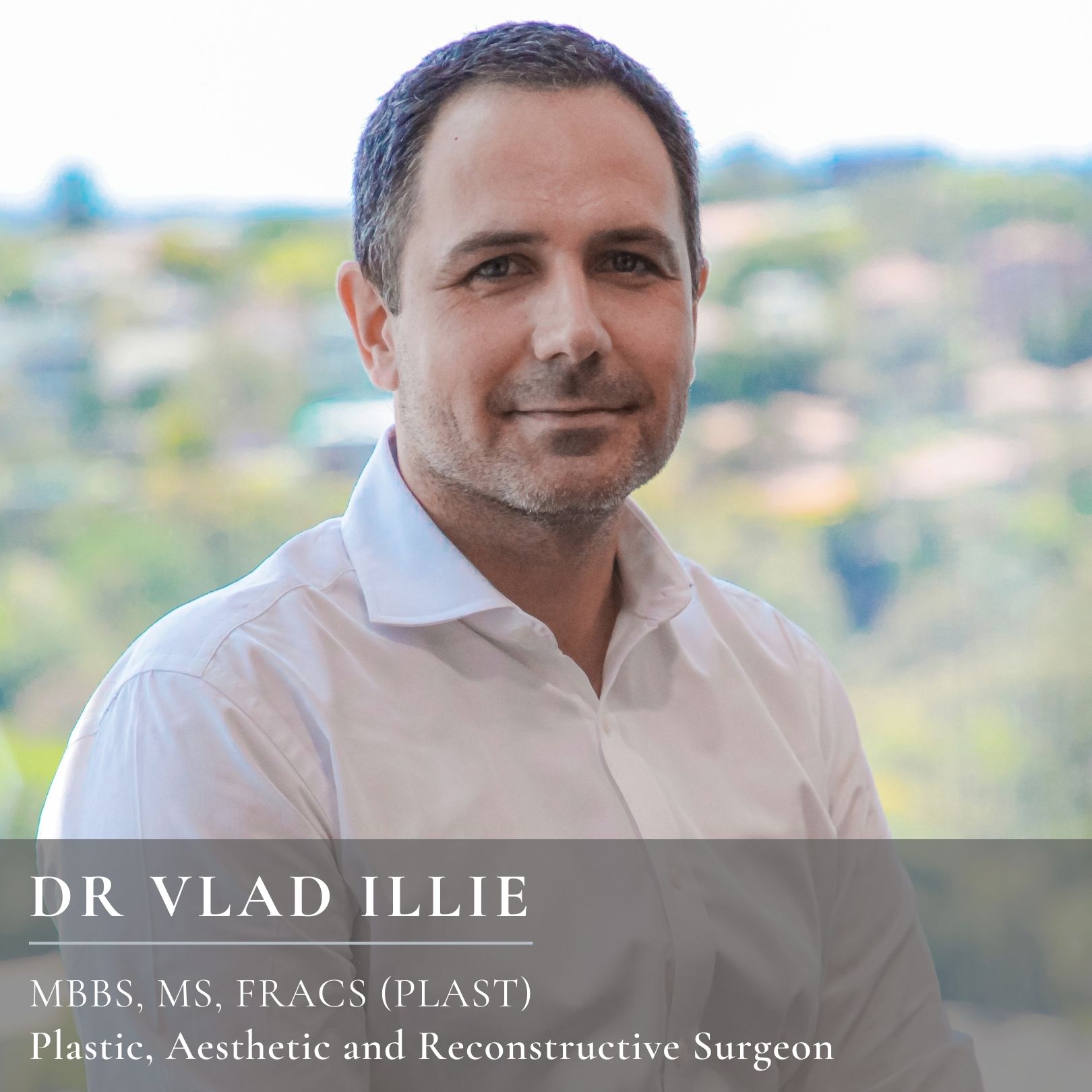
Dr Vlad ILLIE
Specialist Plastic and Reconstructive Surgeon
MBBS, MS, FRACS (plastic and reconstructive surgery)
AHPRA Registration Number MED0000966953
Dr Vlad ILLIE is a Sydney-based specialist plastic and reconstructive surgeon known for his meticulous surgical technique, patient‑centred philosophy, and commitment to natural, long‑term outcomes. With extensive experience across aesthetic and reconstructive surgery, he combines rigorous, research-led practice with a calm, thoughtful approach that supports patients through every stage of their surgical journey.
In addition to his operative work, patients can access a carefully chosen range of evidence-based non‑surgical treatments in his clinic, ensuring a cohesive and thoughtful pathway of care.
Ready to explore your options?
If you’re considering a procedure or simply want clarity on what suits you, starting with a conversation is the most helpful step. Our team offers thoughtful, personalised guidance to help you understand your options and your timing.
Read This Next
Heavy Upper Eyelids: Why They Can Leave You Looking (and Feeling) Tired
“Am I just tired, or is it my eyelids?” It's a question I hear constantly, and often the honest answer is both — heavy, hooded upper eyelids can genuinely make you look more tired than you feel, and in a lot of cases, make you feel more tired than you should, too....
Scar Management After Surgery: A Surgeon’s Guide to Better Healing
Every surgical procedure leaves a scar. There's no way around that — it's simply how skin closes and heals. But there's a big difference between a scar that's left to do its own thing and one that's actively supported through the healing process, and patients often...
Sagging Mouth Corners: Why It Happens and What Can Help
“I don't feel sad or angry, but people keep asking if I'm okay.” I hear a version of this often, usually from patients noticing that the corners of their mouth have started to turn downward, giving their resting expression a look they don't feel on the inside. It's an...
Plastic Surgery Articles – Dr Vlad ILLIE in Sydney
Explore clear, clinically grounded guidance on contemporary plastic surgery and cosmetic medicine. Each piece offers practical information to help you understand modern techniques, treatment considerations, and the principles that shape contemporary aesthetic...
Breast Augmentation Surgery in Sydney
Breast augmentation (augmentation mammoplasty) is a surgical procedure that involves placing implants to increase breast size or improve breast shape. It addresses concerns such as changes in breast volume that may occur after pregnancy, weight fluctuations, or...
Arm Lift Surgery in Sydney
An arm lift (brachioplasty) is a surgical procedure that addresses changes in the upper arm appearance that can occur after significant weight loss, ageing, or other factors, such as loose skin, excess fat deposits, and reduced arm contour definition. The...
Schedule a Consultation
Ph (02) 9101 4707
Fax (02) 9182 0092
office@drvladillie.com.au
Sydney Centre for Plastic Surgery
Suite 1702, Westfield Tower 2
101 Grafton St
Bondi Junction NSW 2022
Central Coast Aesthetics
Suite 2, Albany St North
Gosford NSW 2250
Breast reduction Sydney, Breast Reduction Surgery Sydney, Boob reduction, Breast Surgery, Breast reduction surgery, Breast surgery for back pain, Surgery for large breasts, Oversized breast surgery – Dr Vlad ILLIE, plastic surgeon Sydney
Breast Augmentation Sydney, Breast Surgery Sydney, Boob job Sydney, Breast Implants Sydney Eastern Suburbs, Breast Enlargement Sydney, Breast Enhancement, Breast Enhancement Sydney, Breast implant surgeon Sydney, Silicone Implants, Motiva Implants – Dr Vlad ILLIE, plastic surgeon Sydney
Breast Reconstruction Surgery Sydney, Breast Cancer Reconstruction Sydney, Diep Flap Surgery, Reconstructive Surgery, Breast Reconstructive Surgery, Breast Surgery Post-Breast Cancer, Breast Surgery Post-Mastectomy – Dr Vlad ILLIE, plastic surgeon St Vincent’s Hospital Sydney
Mummy Makeover, Saggy Breasts Surgery, Breast Lift & Implant, Boob lift, Breast enlargement and lift, Breast enhancement Sydney, Breast surgery post-pregnancy, Breast surgery post-weight loss – Dr Vlad ILLIE, plastic surgeon St Vincent’s Hospital Sydney
Breast Augmentation Sydney, Breast Surgery Sydney, Boob job Sydney, Breast Implants Sydney Eastern Suburbs, Breast Enlargement Sydney, Breast Enhancement, Breast Enhancement Sydney, Breast implant Surgeon Sydney, Silicone Implants, Motiva Implants – Dr Vlad ILLIE, plastic surgeon
Breast Revision, Breast Surgery Sydney, Breast implant revision, Breast augmentation revision, Breast implant replacement, Breast Implant Reduction, Breast Implant Replacement, Surgery for botched breasts – Dr Vlad ILLIE, plastic surgeon
Tuberous breast surgery Sydney, tuberous breast correction Sydney, tuberous breasts, plastic surgeon Sydney, cosmetic surgeon Sydney, severe tuberous breasts, mild tuberous breast, Tuberomastoplasty, Lollypop Breast Lift – Dr Vlad ILLIE, plastic surgeon Sydney
Asian Breast Surgery Sydney, Asian breast implants, Asian scar healing breast implants, Asian breast reduction Sydney, Asian breast revision Sydney – Dr Vlad ILLIE, plastic surgeon Bondi Junction
Breast implant removal Sydney, Breast explant Sydney, breast implant removal surgery, breast implant removal plastic surgeon Sydney, BREAST IMPLANT EXPLANTATION SURGERY, removal of the breast implants, breast implant revision procedures performed, including removal of breast implants – Dr Vlad ILLIE, plastic surgeon Sydney