
There is a particular kind of comment I hear often in consultation: ‘She looks wonderful, but I can’t say why.’ It is usually offered about a friend, a colleague, or a public figure who has undergone some form of aesthetic refinement — and the inability to name the change is not a failure of observation. It is, more often than not, the intended outcome of thoughtful, restrained treatment planning.
This is the essence of what I refer to as invisible transformation: changes to the face and body that read not as alteration, but as restoration — a return to a version of oneself that looks rested, balanced, and quietly well, rather than visibly ‘done.’ For many women over 40 considering surgical or non-surgical treatment for the first time, this is often the primary concern, sometimes even outweighing questions of specific technique or downtime: will this look like me, or will it look like something has been done to me?
The distinction matters enormously, and it is one that separates thoughtful aesthetic practice from more formulaic approaches. Invisible transformation is not about doing less; it is about doing precisely what is needed, in the correct proportion, informed by an understanding of individual anatomy, facial harmony, and the specific ways in which a particular face ages. It requires, frankly, more clinical judgement than dramatic change does — because subtlety leaves less room for error to hide.
In this article, I want to explore what makes a transformation read as invisible rather than obvious, the anatomical and technical principles that underpin this approach, the treatment options — surgical and non-surgical — that lend themselves to this philosophy, and the lifestyle and psychological dimensions that support a naturally refreshed appearance over time.
It is also worth acknowledging, at the outset, that invisible transformation is not a marketing description but a clinical philosophy — one that shapes decisions made long before a needle or scalpel is involved, from the initial assessment of facial proportion to the choice of technique, product volume, and even the pace at which treatment unfolds over months or years. It asks more of both practitioner and patient than a straightforward request for a specific product or procedure, because it requires a shared understanding of what, precisely, has changed, and what a considered restoration of that change might reasonably look like.
Scientific Background
Why Some Changes Read as Natural and Others Do Not
A face can carry a meaningful degree of treatment without ever registering as ‘treated’ — provided proportion and symmetry are maintained throughout.
The human eye is remarkably attuned to facial proportion and symmetry, even when we cannot consciously articulate why a face looks ‘right.’ Decades of research into facial attractiveness and perception point consistently to a preference for balance, proportion and harmony over any single dramatic feature. This is central to understanding why certain aesthetic changes read as natural, while others — even when technically well executed — can appear conspicuous.
The Concept of Facial Harmony
Facial harmony refers to the proportional relationship between features: the balance between the upper, middle and lower thirds of the face; the relationship between cheek volume and jawline definition; the symmetry, or acceptable asymmetry, between the two sides of the face. When a single feature is altered in isolation, without consideration of its relationship to the rest of the face, the result can appear disproportionate, regardless of how well that individual feature was executed. This is one of the more common technical explanations for aesthetic outcomes that read as overdone — not because too much was changed, but because a change was made without reference to the whole.
Volume Loss and Structural Ageing
Ageing is not simply a matter of skin laxity, as is sometimes assumed. A substantial component of facial ageing involves the loss of deep fat compartments and, over time, bone remodelling — particularly around the orbital rim, cheekbones and jaw. As these structural supports diminish, the skin that once sat over a fuller foundation begins to appear looser, not necessarily because the skin itself has lost significant elasticity, but because it has lost what it was resting upon. This distinction matters considerably: addressing skin laxity alone, without considering volume, often produces a pulled or flattened appearance, whereas restoring volume in the correct anatomical planes can soften the very lines that prompted concern in the first place, without requiring aggressive skin excision or resurfacing.
Why Overcorrection Reads as Obvious
Much of what the public identifies as ‘overdone’ aesthetic work is, from a clinical perspective, a matter of proportion and placement rather than technique failure. Excessive volume in a single area, tension applied without regard for natural facial movement, or treatment that ignores the individual’s baseline anatomy in favour of a generic aesthetic template — these are the more common contributors to results that draw attention rather than deflect it. Invisible transformation, by contrast, is built on the principle of working with the individual’s existing structure, restoring what has been lost rather than imposing what was never there.
The Role of Skin Quality Versus Structure
It is worth distinguishing between two separate, though related, contributors to an aged appearance: structural change (volume loss, bone remodelling, tissue descent) and surface change (skin texture, pigmentation, fine lines). These two categories often require different treatment strategies, and a genuinely invisible transformation typically addresses both in proportion to how each has changed for that individual. A face with significant structural volume loss but relatively good skin quality will benefit most from volume restoration; a face with well-preserved structure but compromised skin texture may see more meaningful improvement from resurfacing or biostimulatory treatments than from any structural intervention. Conflating the two, and applying a structural solution to a surface problem or vice versa, is a common source of results that feel imprecise, even when no single element is objectively wrong.
The Perception Threshold
Research into facial perception suggests that observers are considerably more sensitive to asymmetry and disproportion than to the presence of treatment itself. In practice, this means a face can carry a meaningful degree of clinical intervention — several individually modest treatments layered thoughtfully over time — without registering as ‘treated’ to the casual observer, provided proportion and symmetry are maintained throughout. This is sometimes described informally as the perception threshold: the point at which cumulative change becomes noticeable not because of its extent, but because proportion has been lost. Staying beneath this threshold is less about limiting the amount of treatment and more about maintaining internal consistency between each element addressed.
Treatment options
Surgical and Non-Surgical Pathways to Subtlety
A wide range of treatments can be approached with the specific goal of invisible transformation. What distinguishes this philosophy is less the treatment itself than the manner and proportion in which it is applied, and the extent to which it is calibrated to the individual’s own anatomy.
Non-Surgical Approaches
- Injectable volumisers (dermal fillers): when used conservatively and placed according to an understanding of deep fat compartment anatomy, these may help restore lost volume in areas such as the cheeks or temples, which can soften the appearance of lower facial laxity without altering the identity of the face.
- Neuromodulators (anti-wrinkle injections): used judiciously, these may help soften the appearance of dynamic lines associated with repeated facial movement, while preserving natural expression — a balance that requires considered dosing rather than a standardised approach.
- Skin biostimulators: certain injectable treatments are designed to encourage the skin’s own collagen production over time, which may help improve skin quality and firmness gradually, often favoured by patients seeking change that unfolds subtly over weeks and months rather than immediately.
- Radiofrequency and ultrasound-based skin tightening: these non-invasive technologies may help improve skin laxity to a modest degree, often considered appropriate for patients with early structural changes who are not yet seeking surgical intervention.
Surgical Approaches
For more established structural change, surgical options may be considered, always with the same underlying principle: restoration proportionate to what has genuinely changed, rather than a fixed or formulaic surgical plan.
- Deep-plane facelift techniques: by repositioning deeper facial tissue layers rather than relying primarily on skin tension, certain facelift approaches may help address structural laxity while reducing the risk of the pulled or wind-swept appearance associated with skin-only tightening.
- Blepharoplasty (eyelid surgery): addressing excess skin or fat around the eyes may help refresh the upper face, particularly when performed with attention to preserving natural eyelid contour and movement.
- Fat grafting: the transfer of a patient’s own fat to areas of volume loss may offer a more biologically integrated approach to restoring facial fullness compared to synthetic alternatives, though outcomes and longevity vary between individuals.
- Neck contouring procedures: given the neck’s significant role in overall facial ageing perception, addressing platysmal banding or submental fullness may contribute meaningfully to a refreshed appearance, sometimes even more than facial surgery alone.
The Role of Sequencing and Restraint
One of the more understated principles in achieving invisible transformation is sequencing: recognising that not every concern needs to be addressed simultaneously, and that a staged, conservative approach — reassessing after each intervention — often produces a more harmonious long-term result than an aggressive, single-session overhaul. This also allows both patient and practitioner to observe how the face responds and settles before considering further intervention, which tends to reduce the likelihood of overcorrection.
Equally important is practitioner restraint. Not every patient who presents for consultation is a suitable candidate for the treatment initially requested, and a considered practitioner will sometimes recommend less than what is asked for, or a different treatment altogether, if that better serves the goal of a natural, proportionate outcome.
Layering Treatments Across Time
A further principle worth understanding is that invisible transformation is often built cumulatively rather than achieved in a single visit. Many patients begin with a lower-intensity, non-surgical measure — a modest volume of biostimulator, a conservative dose of neuromodulator — observe how their own face responds over subsequent months, and use that information to inform whether, and how, to proceed further. This iterative approach allows the practitioner to calibrate treatment to the individual’s specific rate and pattern of ageing, rather than applying a fixed protocol. For patients considering surgical options, a similar logic can apply: some choose to address the area of greatest structural change first — commonly the mid-face or neck — and reassess overall facial balance before considering additional procedures, rather than committing to an extensive combined surgical plan from the outset.
Lifestyle & Holistic Factors
Supporting the Result
Any clinical intervention, surgical or non-surgical, exists within the broader context of how the skin and underlying tissue are cared for day to day. Lifestyle factors do not replace treatment, but they meaningfully influence how results present and how long they are maintained.
Skin Quality as a Foundation
Even the most technically precise structural work is presented through the skin itself, and skin quality — its texture, tone and resilience — significantly influences how natural a result appears. A consistent skincare routine incorporating sun protection, appropriate exfoliation and barrier support may help maintain the quality of skin that sits over any structural correction.
Nutrition and Hydration
Adequate hydration and a nutrient-dense diet, particularly one supporting collagen synthesis through protein and vitamin C intake, may contribute to overall skin resilience, complementing rather than substituting for clinical treatment.
Sun Protection and Environmental Care
Given that UV exposure accelerates both skin laxity and pigmentation, consistent sun protection remains one of the most influential lifestyle factors in preserving a naturally refreshed appearance over time, regardless of what clinical treatments have been pursued.
Facial Movement and Expression
Because invisible transformation relies on preserving natural facial movement, patients are often encouraged to discuss with their practitioner how a given treatment might affect expression — smiling, frowning, raised brows — before proceeding, since preserved movement is frequently what most distinguishes a natural result from one that appears altered.
Sleep, Posture and Everyday Habits
Beyond the more commonly discussed factors of diet and sun protection, everyday habits such as sleep position, hydration levels, and even repetitive facial expressions associated with habitual squinting or frowning can contribute to how the face presents over time. While these factors do not substitute for clinical intervention where structural change has already occurred, attention to them may support the longevity of results achieved through treatment, and forms a reasonable part of a broader conversation about maintaining a naturally refreshed appearance between clinical visits.
Frequently Asked Questions
Will people be able to tell I’ve had treatment?
That depends far more on the proportion and placement of what’s done than on whether treatment occurred at all. A carefully calibrated plan, based on your individual anatomy rather than a fixed template, is considerably less likely to read as noticeably ‘done’ than broad, undifferentiated treatment.
What actually causes a result to look obvious rather than natural?
In clinical practice, this is usually a matter of proportion rather than technique — excessive volume in a single area, or treatment applied without reference to the face as a whole, tends to draw the eye. Working within an individual’s existing structure, rather than imposing a generic aesthetic template, is central to avoiding this.
Is a subtle result a compromise, or can it genuinely be the better clinical choice?
For many patients seeking to look rested and well rather than visibly altered, a proportionate approach tends to produce greater long-term satisfaction than a more dramatic one. It isn’t a lesser option — it’s often the more technically demanding one, since subtlety leaves less room for error to hide.
Can I start with something small and reassess before doing more?
Yes, and this staged approach is frequently preferable. Beginning conservatively allows both patient and practitioner to observe how the face responds before considering further treatment, which tends to reduce the risk of overcorrection.
Do you ever recommend against treatment a patient has specifically requested?
Regularly. Part of thorough, ethical practice involves being direct when a requested treatment is unlikely to serve a patient’s actual goals, or when a different, more conservative approach would better achieve the proportion being sought.
How do you decide which area of my face to prioritise first?
Through a structured assessment of facial proportion — evaluating the relationship between the upper, middle and lower thirds of the face, and identifying which specific anatomical change is most contributing to the concern being raised, rather than treating the face uniformly.
Does ‘natural-looking’ mean minimal treatment, or can more extensive work still look natural?
It can mean either, depending on the individual. Some patients have a genuine, broader pattern of structural change that benefits from more comprehensive treatment; the key factor is whether the plan is proportionate to what has actually changed, not the total volume of treatment involved.
What questions should I ask in consultation to ensure a natural-looking outcome?
It is reasonable to ask why a specific technique or product is being recommended for your particular anatomy, how the practitioner is approaching facial proportion and symmetry, and whether a more conservative alternative exists.
If I’ve had more extensive treatment elsewhere, can a more conservative approach still help now?
In many cases, yes. A thorough assessment can identify whether existing treatment has created disproportion that a more measured, targeted approach may help address, always with realistic expectations about what is achievable from that starting point.
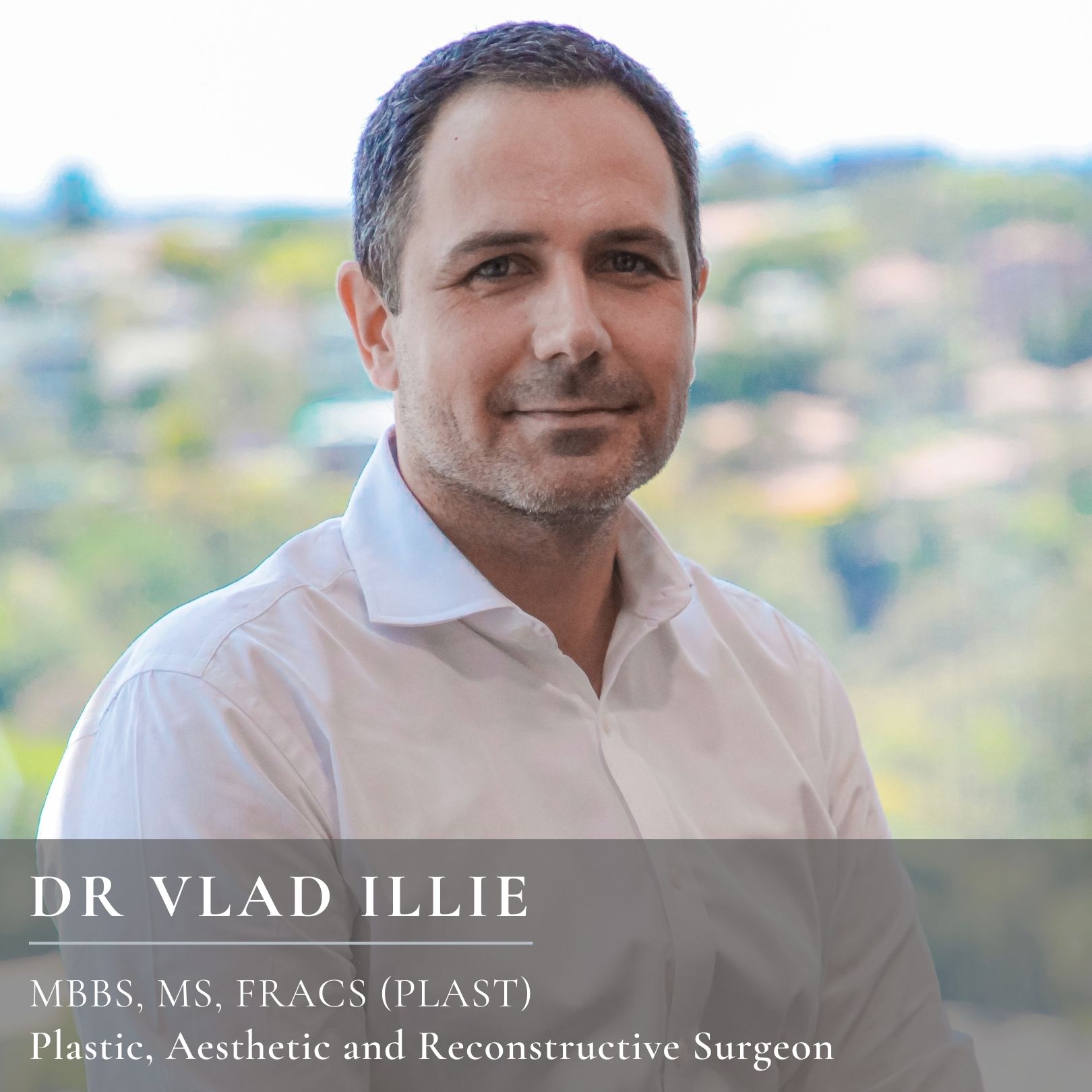
Dr Vlad ILLIE
Specialist Plastic and Reconstructive Surgeon
MBBS, MS, FRACS (plastic and reconstructive surgery)
AHPRA Registration Number MED0000966953
Dr Vlad ILLIE is a Sydney-based specialist plastic and reconstructive surgeon known for his meticulous surgical technique, patient‑centred philosophy, and commitment to natural, long‑term outcomes. With extensive experience across aesthetic and reconstructive surgery, he combines rigorous, research-led practice with a calm, thoughtful approach that supports patients through every stage of their surgical journey.
In addition to his operative work, patients can access a carefully chosen range of evidence-based non‑surgical treatments in his clinic, ensuring a cohesive and thoughtful pathway of care.
Ready to explore your options?
If you’re considering a procedure or simply want clarity on what suits you, starting with a conversation is the most helpful step. Our team offers thoughtful, personalised guidance to help you understand your options and your timing.
Read This Next
Age 40 vs 50 vs 60: How Ageing Changes Direction, Not Just Degree
One of the more persistent misconceptions I encounter in consultation is the idea that ageing is a single, linear process — that a woman at 60 is simply experiencing 'more' of whatever a woman at 40 is experiencing, in greater quantity. Clinically, this is not...
The Treatments We Don’t Talk About Enough
Aesthetic conversation, both in public discourse and among friends, tends to concentrate on a relatively narrow set of treatments — the ones photographed, discussed on social media, or featured prominently in marketing. Yet a considerable portion of the treatment I...
The 1% Difference: Why Small Proportional Changes Produce Outsized Perceptual Impact
In more than two decades of clinical practice, I have observed a pattern that initially surprised me and now informs almost every consultation I conduct: the changes that produce the most meaningful improvement in how a face is perceived are frequently the smallest...
Plastic Surgery Articles – Dr Vlad ILLIE in Sydney
Explore clear, clinically grounded guidance on contemporary plastic surgery and cosmetic medicine. Each piece offers practical information to help you understand modern techniques, treatment considerations, and the principles that shape contemporary aesthetic...
Breast Augmentation Surgery in Sydney
Breast augmentation (augmentation mammoplasty) is a surgical procedure that involves placing implants to increase breast size or improve breast shape. It addresses concerns such as changes in breast volume that may occur after pregnancy, weight fluctuations, or...
Arm Lift Surgery in Sydney
An arm lift (brachioplasty) is a surgical procedure that addresses changes in the upper arm appearance that can occur after significant weight loss, ageing, or other factors, such as loose skin, excess fat deposits, and reduced arm contour definition. The...
Schedule a Consultation
Ph (02) 9101 4707
Fax (02) 9182 0092
office@drvladillie.com.au
Sydney Centre for Plastic Surgery
Suite 1702, Westfield Tower 2
101 Grafton St
Bondi Junction NSW 2022
Central Coast Aesthetics
Suite 2, Albany St North
Gosford NSW 2250
Breast reduction Sydney, Breast Reduction Surgery Sydney, Boob reduction, Breast Surgery, Breast reduction surgery, Breast surgery for back pain, Surgery for large breasts, Oversized breast surgery – Dr Vlad ILLIE, plastic surgeon Sydney
Breast Augmentation Sydney, Breast Surgery Sydney, Boob job Sydney, Breast Implants Sydney Eastern Suburbs, Breast Enlargement Sydney, Breast Enhancement, Breast Enhancement Sydney, Breast implant surgeon Sydney, Silicone Implants, Motiva Implants – Dr Vlad ILLIE, plastic surgeon Sydney
Breast Reconstruction Surgery Sydney, Breast Cancer Reconstruction Sydney, Diep Flap Surgery, Reconstructive Surgery, Breast Reconstructive Surgery, Breast Surgery Post-Breast Cancer, Breast Surgery Post-Mastectomy – Dr Vlad ILLIE, plastic surgeon St Vincent’s Hospital Sydney
Mummy Makeover, Saggy Breasts Surgery, Breast Lift & Implant, Boob lift, Breast enlargement and lift, Breast enhancement Sydney, Breast surgery post-pregnancy, Breast surgery post-weight loss – Dr Vlad ILLIE, plastic surgeon St Vincent’s Hospital Sydney
Breast Augmentation Sydney, Breast Surgery Sydney, Boob job Sydney, Breast Implants Sydney Eastern Suburbs, Breast Enlargement Sydney, Breast Enhancement, Breast Enhancement Sydney, Breast implant Surgeon Sydney, Silicone Implants, Motiva Implants – Dr Vlad ILLIE, plastic surgeon
Breast Revision, Breast Surgery Sydney, Breast implant revision, Breast augmentation revision, Breast implant replacement, Breast Implant Reduction, Breast Implant Replacement, Surgery for botched breasts – Dr Vlad ILLIE, plastic surgeon
Tuberous breast surgery Sydney, tuberous breast correction Sydney, tuberous breasts, plastic surgeon Sydney, cosmetic surgeon Sydney, severe tuberous breasts, mild tuberous breast, Tuberomastoplasty, Lollypop Breast Lift – Dr Vlad ILLIE, plastic surgeon Sydney
Asian Breast Surgery Sydney, Asian breast implants, Asian scar healing breast implants, Asian breast reduction Sydney, Asian breast revision Sydney – Dr Vlad ILLIE, plastic surgeon Bondi Junction
Breast implant removal Sydney, Breast explant Sydney, breast implant removal surgery, breast implant removal plastic surgeon Sydney, BREAST IMPLANT EXPLANTATION SURGERY, removal of the breast implants, breast implant revision procedures performed, including removal of breast implants – Dr Vlad ILLIE, plastic surgeon Sydney