
One of the more persistent misconceptions I encounter in consultation is the idea that ageing is a single, linear process — that a woman at 60 is simply experiencing ‘more’ of whatever a woman at 40 is experiencing, in greater quantity. Clinically, this is not accurate. The dominant drivers of facial and bodily ageing shift meaningfully across these decades, and a treatment plan appropriate for one stage may be poorly suited, or even counterproductive, for another.
At 40, the primary concerns are often early, subtle: the first signs of volume redistribution, the beginning of fine lines from decades of expression, a certain loss of the skin’s youthful bounce. At 50, structural changes tend to become more pronounced, frequently compounded by the hormonal transition of menopause, which affects skin collagen density in ways distinct from chronological ageing alone. At 60 and beyond, the priorities often shift again — toward skin quality, bone remodelling, and a recalibration of what treatment can reasonably achieve, given a longer accumulation of structural change.
Understanding these distinctions is not simply an academic exercise. It has direct, practical implications for treatment planning: what may serve a 42-year-old well — a conservative injectable programme focused on early prevention — is unlikely to adequately address the concerns of a 63-year-old dealing with more substantial tissue descent and skin laxity, and vice versa. A one-size-fits-all approach, whether applied through generic skincare marketing or an undifferentiated treatment menu, tends to underserve every age group it claims to address.
This article sets out the distinct anatomical and physiological priorities of each decade, the treatment approaches that tend to align with each, and the broader lifestyle and psychological considerations relevant at each life stage. My hope is that by understanding what is actually changing at each age, you can approach any consultation with a clearer sense of what questions to ask and what outcomes are reasonable to expect.
It is also worth saying plainly that none of this framework is intended to suggest that treatment becomes more necessary, or more urgent, with each passing decade. Many women choose to age with minimal or no clinical intervention at any stage, and this remains an entirely valid choice. The purpose of understanding decade-specific change is not to prescribe a course of treatment, but to ensure that whatever decision is made, whether to intervene or not, is made with an accurate understanding of what is actually occurring physiologically.
Scientific Background
What Actually Changes, and When
Facial and bodily ageing results from the interplay of four broad tissue layers: skin, fat, muscle, and bone. Each ages at a different rate and in a different manner, and the balance between them shifts considerably across the decades under discussion here.
The Forties: Early Volume Redistribution
In the fourth decade, collagen production, which has been gradually declining since the mid-twenties, begins to produce more visible effects. Superficial fat compartments in the face may begin to descend or diminish, most noticeably in the under-eye and cheek regions, contributing to early signs of hollowing or a less defined contour. Fine lines, particularly around the eyes and mouth, often become more established as a result of both reduced skin elasticity and decades of repeated facial expression. Skin tone may also begin to show early pigmentary changes from cumulative sun exposure, discussed in greater detail elsewhere in this series.
The Fifties: Menopause and Structural Acceleration
The fifth decade frequently coincides with menopause, a hormonal transition with direct dermatological consequences. Oestrogen plays a meaningful role in maintaining skin collagen density, and its decline during and after menopause has been associated with a measurable acceleration in skin thinning and loss of elasticity during this period, beyond what chronological ageing alone would predict. Structurally, deep fat compartment loss and early bone remodelling around the orbital and jaw regions become more clinically apparent, often manifesting as increased skin laxity along the jawline and neck, and more pronounced nasolabial and marionette lines.
The Sixties and Beyond: Compounding Structural Change and Skin Quality
By the sixth decade, the cumulative effects of the preceding changes — combined with more advanced bone remodelling, further fat compartment volume loss, and decades of skin exposure to environmental factors — tend to produce more pronounced structural change: greater skin laxity, more defined jowling, and reduced skin thickness overall. Skin quality itself, rather than isolated lines or volume loss, often becomes a more central concern, as thinner, less elastic skin behaves differently under both surgical and non-surgical intervention than it did in earlier decades.
Why This Matters for Treatment Planning
Because the dominant driver of visible ageing differs across these decades — early volume redistribution at 40, hormonally accelerated structural change at 50, compounded structural and skin-quality change at 60 — the treatment priorities appropriate at each stage typically differ as well. This is why a thorough consultation should involve more than a discussion of desired outcome; it should include an assessment of which underlying tissue layers are contributing most significantly to the concerns being raised.
Genetics, Ethnicity and Individual Variation
It is important to state clearly that the decade-based framework outlined here describes general tendencies rather than fixed rules. Genetic factors, ethnicity, sun exposure history, smoking status, and general health all influence the rate and pattern of ageing considerably, meaning two women of the same age can present with quite different clinical pictures. Skin of colour, for instance, tends to show a somewhat different balance between structural and pigmentary change compared to fairer skin types, often with relatively preserved collagen density but a greater tendency toward pigmentary concerns. A considered assessment always begins with the individual in front of the practitioner, using decade-based tendencies as context rather than a substitute for direct clinical examination.
Treatment options
Treatment by Decade
What may serve a 42-year-old well is unlikely to adequately address the concerns of a 63-year-old — and vice versa.
While individual variation means these categories are guidelines rather than rules, certain treatment approaches tend to align more closely with the physiological priorities of each decade.
In the Forties: Prevention and Early Intervention
- Conservative use of neuromodulators to soften early dynamic lines while movement is still largely preserved.
- Skin biostimulatory treatments that may help support the skin’s own collagen production before more significant decline occurs.
- Broad-spectrum sun protection and antioxidant-focused skincare, which may help slow the progression of both textural and pigmentary changes.
- Modest volume restoration in early areas of hollowing, such as the tear trough or temples, where appropriate.
In the Fifties: Addressing Accelerated Structural Change
- More comprehensive volume restoration across deep fat compartments, addressing cheek, temple and jawline volume loss in a coordinated manner.
- Skin-tightening technologies, such as radiofrequency or ultrasound-based devices, which may help address early-to-moderate laxity without surgical intervention.
- For more established laxity, surgical options such as facelift or neck lift procedures may be discussed, particularly where non-surgical measures have reached the limit of what they can reasonably achieve.
- A conversation with a general practitioner regarding menopausal hormone therapy may also be relevant for some women, given its documented relationship with skin collagen density, though this decision sits outside aesthetic practice and should be made in consultation with an appropriately qualified physician.
In the Sixties and Beyond: Skin Quality and Considered Structural Correction
- Surgical procedures, where appropriate, often require more careful planning around skin quality and healing capacity, and a thorough medical assessment becomes increasingly important at this stage.
- Resurfacing treatments, such as fractional laser therapy, may help improve skin texture and quality, which often becomes a more central concern than volume alone.
- Combination approaches — surgical correction of significant laxity paired with non-surgical maintenance of skin quality — are frequently considered, always calibrated to the individual’s health status and healing profile.
- A more conservative, staged approach to any intervention is often prudent, allowing recovery to be carefully monitored and outcomes assessed before further treatment is considered.
The Continuity Principle
It is worth noting that women who begin considered, conservative treatment in their forties often present with a different set of concerns in their fifties and sixties than those beginning treatment for the first time later in life. This is not a guarantee of any particular outcome, as individual variation remains significant, but it underscores why treatment planning benefits from being thought of as a continuum across decades, rather than a series of isolated decisions made in response to acute concerns.
When to Begin, and When to Wait
A question I am asked frequently, particularly by women in their late thirties and early forties, is whether there is an ideal age to begin aesthetic treatment. There is no single correct answer, but a useful framework is to consider what a given treatment is attempting to achieve: preventative measures, such as sun protection, skin-supportive skincare and conservative biostimulatory treatment, generally carry limited downside when begun earlier, as they work with the skin’s existing capacity rather than attempting to reverse established change. Corrective measures — addressing volume loss, laxity or established structural change — are, by contrast, generally most appropriately timed to when a specific concern has become clinically apparent, rather than pre-emptively. This distinction can help patients avoid both the frustration of under-treating established change and the unnecessary cost and exposure of over-treating a concern that has not yet developed.
Lifestyle & Holistic Factors
Supporting Each Decade
Lifestyle factors relevant to skin and structural health also shift somewhat in emphasis across these decades.
Nutrition and Bone Health
As bone remodelling becomes a more significant contributor to facial ageing from the fifties onward, attention to overall bone health — adequate calcium and vitamin D intake, weight-bearing exercise, and monitoring for osteoporosis risk in consultation with a general practitioner — becomes relevant not only for general health but for its indirect relationship with facial and jaw structure.
Sun Protection as a Lifelong Practice
Regardless of decade, sun protection remains one of the most influential controllable factors in skin ageing, and its cumulative benefit becomes more apparent the earlier it is adopted and the more consistently it is maintained.
Exercise and Circulation
Regular physical activity, which supports circulation and overall tissue health, may contribute to skin vitality across all three decades discussed here, though its role becomes particularly relevant in supporting healing capacity for women considering surgical intervention later in life.
Sleep and Hormonal Health
Sleep quality and hormonal balance, both of which can be affected by perimenopausal and menopausal transitions, may influence skin repair processes, and are worth discussing with a general practitioner as part of a holistic approach to skin and overall health during this period.
Adapting Skincare Formulation Over Time
Skincare needs also tend to shift across these decades, generally reflecting the same underlying physiological changes discussed throughout this article. In the forties, lighter, antioxidant-forward formulations paired with early retinoid use may suit skin that is still relatively resilient. In the fifties, as skin barrier function and lipid content typically decline alongside hormonal changes, richer, more barrier-supportive formulations are often better tolerated. In the sixties and beyond, skin can become more sensitive to active ingredients generally, and a more gradual, gentle approach to introducing new products — alongside continued consistent sun protection — is frequently appropriate. These are general tendencies, and any change in skincare routine is best undertaken with attention to how an individual’s skin actually responds, rather than by age alone.
Frequently Asked Questions
Is there an ideal age to start treatment?
There is no single correct age. Preventative measures — sun protection, skin-supportive skincare, conservative biostimulatory treatment — generally carry limited downside when begun earlier. Corrective measures, addressing established volume loss or laxity, are usually best timed to when a specific concern has become clinically apparent, rather than pursued pre-emptively.
Why did my skin change so much around menopause specifically?
Oestrogen plays a meaningful role in maintaining skin collagen density, and its decline during and after menopause has been associated with a measurable acceleration in skin thinning and loss of elasticity, beyond what chronological ageing alone would predict.
Do I need more treatment the older I get?
Not necessarily. Many women choose minimal or no intervention at any age, and that remains an entirely valid choice. This decade-based framework exists to support accurate understanding of what is happening physiologically, not to prescribe escalating treatment.
Can surgery still meaningfully help in my sixties or beyond?
Often, yes, though the scope of what is achievable is shaped by decades of accumulated structural change, and a more careful assessment of skin quality and healing capacity becomes increasingly important. Expectations are calibrated accordingly during consultation.
What is actually different about ageing in my forties versus my fifties?
In the forties, early volume redistribution and fine lines from years of expression tend to dominate. In the fifties, hormonally accelerated structural change — deep fat compartment loss, early bone remodelling, increased jawline and neck laxity — becomes more clinically apparent, often more pronounced than chronological ageing alone would suggest.
Should I consider hormone replacement therapy for my skin, not just menopausal symptoms?
That decision sits outside aesthetic practice and should be made in consultation with your general practitioner or endocrinologist, given the broader health implications involved. It is, however, a reasonable topic to raise with your GP given the documented relationship between oestrogen and skin collagen density.
Why does treatment that worked well for a friend in her fifties not seem right for me at the same age?
Genetics, ethnicity, sun exposure history, smoking status and general health all influence the rate and pattern of ageing considerably. Two women of the same age can present with quite different clinical pictures, which is why assessment always begins with the individual rather than a generalised decade-based rule.
Does treating early in my forties mean I’ll need less done later on?
This is not something that can be promised, and individual variation remains significant. However, women who begin considered, conservative treatment earlier often present with a different pattern of concerns later in life than those beginning treatment for the first time in their fifties or sixties.
How do bone changes affect my face as I get older, and can anything be done about it?
Bone remodelling around the orbital rim, cheekbones and jaw becomes a more significant contributor to facial ageing from the fifties onward, which is why attention to bone health — calcium, vitamin D, weight-bearing exercise — has some indirect relevance to facial and jaw structure, alongside any aesthetic treatment considered.
I’m in my sixties and haven’t had any treatment before — is it too late to start?
It is not inherently too late, though realistic expectation-setting becomes particularly important at this stage, since the scope of what any treatment can achieve is shaped by decades of accumulated change. Meaningful, worthwhile improvement remains possible for many patients, calibrated to a different standard of outcome than earlier intervention would produce.
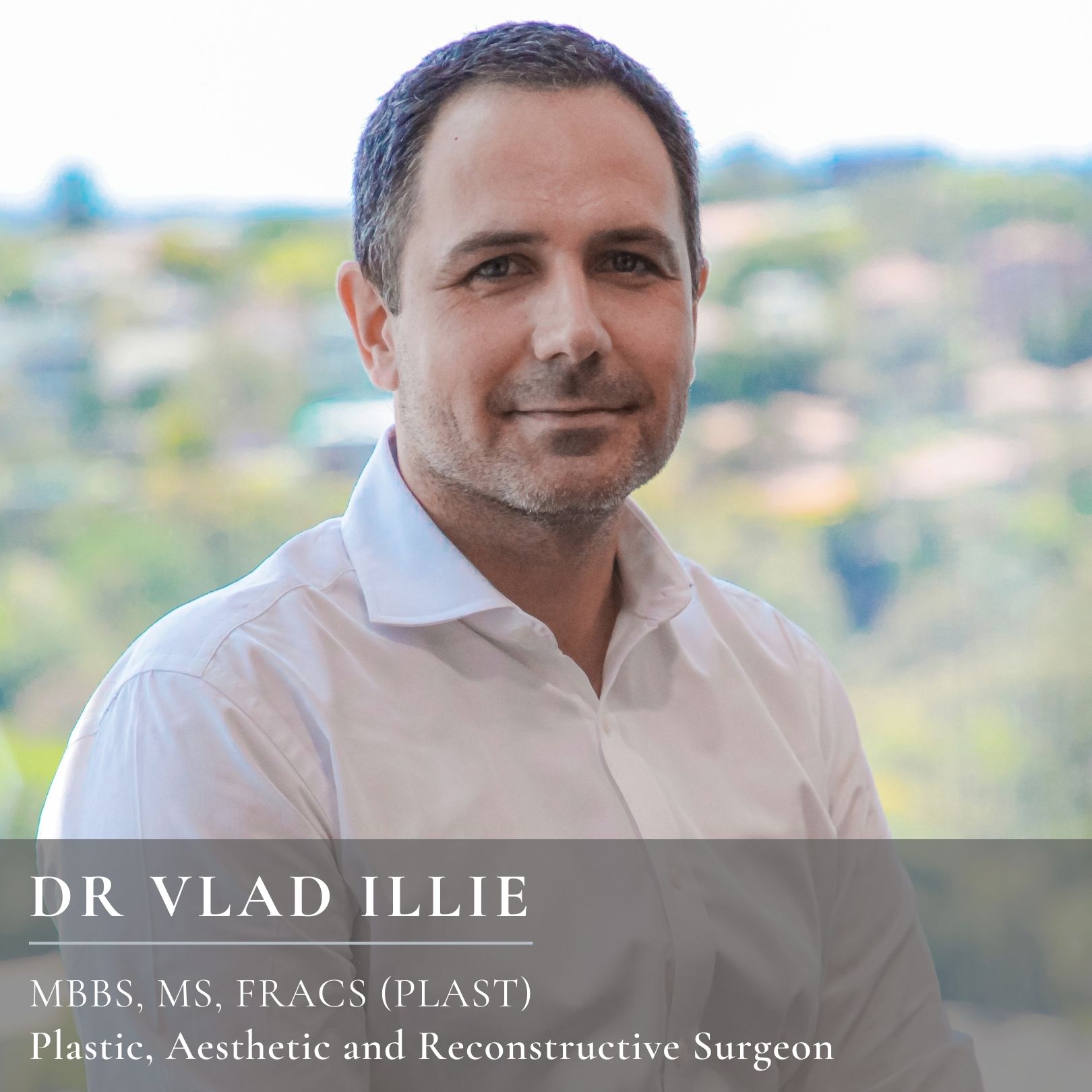
Dr Vlad ILLIE
Specialist Plastic and Reconstructive Surgeon
MBBS, MS, FRACS (plastic and reconstructive surgery)
AHPRA Registration Number MED0000966953
Dr Vlad ILLIE is a Sydney-based specialist plastic and reconstructive surgeon known for his meticulous surgical technique, patient‑centred philosophy, and commitment to natural, long‑term outcomes. With extensive experience across aesthetic and reconstructive surgery, he combines rigorous, research-led practice with a calm, thoughtful approach that supports patients through every stage of their surgical journey.
In addition to his operative work, patients can access a carefully chosen range of evidence-based non‑surgical treatments in his clinic, ensuring a cohesive and thoughtful pathway of care.
Ready to explore your options?
If you’re considering a procedure or simply want clarity on what suits you, starting with a conversation is the most helpful step. Our team offers thoughtful, personalised guidance to help you understand your options and your timing.
Read This Next
The Treatments We Don’t Talk About Enough
Aesthetic conversation, both in public discourse and among friends, tends to concentrate on a relatively narrow set of treatments — the ones photographed, discussed on social media, or featured prominently in marketing. Yet a considerable portion of the treatment I...
The 1% Difference: Why Small Proportional Changes Produce Outsized Perceptual Impact
In more than two decades of clinical practice, I have observed a pattern that initially surprised me and now informs almost every consultation I conduct: the changes that produce the most meaningful improvement in how a face is perceived are frequently the smallest...
Treatment Pairings: The Clinical Logic of Combining Procedures
A question I field regularly in consultation concerns not which single treatment to pursue, but how different treatments interact with one another: whether a particular injectable can be combined with a particular laser, whether surgery should precede or follow...
Plastic Surgery Articles – Dr Vlad ILLIE in Sydney
Explore clear, clinically grounded guidance on contemporary plastic surgery and cosmetic medicine. Each piece offers practical information to help you understand modern techniques, treatment considerations, and the principles that shape contemporary aesthetic...
Breast Augmentation Surgery in Sydney
Breast augmentation (augmentation mammoplasty) is a surgical procedure that involves placing implants to increase breast size or improve breast shape. It addresses concerns such as changes in breast volume that may occur after pregnancy, weight fluctuations, or...
Arm Lift Surgery in Sydney
An arm lift (brachioplasty) is a surgical procedure that addresses changes in the upper arm appearance that can occur after significant weight loss, ageing, or other factors, such as loose skin, excess fat deposits, and reduced arm contour definition. The...
Schedule a Consultation
Ph (02) 9101 4707
Fax (02) 9182 0092
office@drvladillie.com.au
Sydney Centre for Plastic Surgery
Suite 1702, Westfield Tower 2
101 Grafton St
Bondi Junction NSW 2022
Central Coast Aesthetics
Suite 2, Albany St North
Gosford NSW 2250
Breast Augmentation Sydney, Breast Surgery Sydney, Boob job Sydney, Breast Implants Sydney Eastern Suburbs, Breast Enlargement Sydney, Breast Enhancement, Breast Enhancement Sydney, Breast implant surgeon Sydney, Silicone Implants, Motiva Implants – Dr Vlad ILLIE, plastic surgeon Sydney
Breast Reconstruction Surgery Sydney, Breast Cancer Reconstruction Sydney, Diep Flap Surgery, Reconstructive Surgery, Breast Reconstructive Surgery, Breast Surgery Post-Breast Cancer, Breast Surgery Post-Mastectomy – Dr Vlad ILLIE, plastic surgeon St Vincent’s Hospital Sydney
Mummy Makeover, Saggy Breasts Surgery, Breast Lift & Implant, Boob lift, Breast enlargement and lift, Breast enhancement Sydney, Breast surgery post-pregnancy, Breast surgery post-weight loss – Dr Vlad ILLIE, plastic surgeon St Vincent’s Hospital Sydney
Breast Augmentation Sydney, Breast Surgery Sydney, Boob job Sydney, Breast Implants Sydney Eastern Suburbs, Breast Enlargement Sydney, Breast Enhancement, Breast Enhancement Sydney, Breast implant Surgeon Sydney, Silicone Implants, Motiva Implants – Dr Vlad ILLIE, plastic surgeon
Breast Revision, Breast Surgery Sydney, Breast implant revision, Breast augmentation revision, Breast implant replacement, Breast Implant Reduction, Breast Implant Replacement, Surgery for botched breasts – Dr Vlad ILLIE, plastic surgeon
Tuberous breast surgery Sydney, tuberous breast correction Sydney, tuberous breasts, plastic surgeon Sydney, cosmetic surgeon Sydney, severe tuberous breasts, mild tuberous breast, Tuberomastoplasty, Lollypop Breast Lift – Dr Vlad ILLIE, plastic surgeon Sydney
Asian Breast Surgery Sydney, Asian breast implants, Asian scar healing breast implants, Asian breast reduction Sydney, Asian breast revision Sydney – Dr Vlad ILLIE, plastic surgeon Bondi Junction
Breast implant removal Sydney, Breast explant Sydney, breast implant removal surgery, breast implant removal plastic surgeon Sydney, BREAST IMPLANT EXPLANTATION SURGERY, removal of the breast implants, breast implant revision procedures performed, including removal of breast implants – Dr Vlad ILLIE, plastic surgeon Sydney