
Sun spots, melasma, dark marks after acne, freckles, dark circles — they can look similar on the surface but come from very different places. Here’s how I tell them apart, and what genuinely helps.
Pigmentation is, by a wide margin, the concern I’m asked about most in consultations — more than any single surgical procedure. It’s also one of the most misdiagnosed, because five quite different conditions can all show up as “a brown mark on my face,” and each one needs a different approach to actually improve.
This article walks through the five types of pigmentation I see most often at my clinics in Bondi Junction and Gosford: solar lentigines, melasma, post-inflammatory hyperpigmentation, freckles, and periorbital hyperpigmentation (dark circles). My aim is to help you recognise which one you’re likely dealing with, understand why it developed, and know what a sensible management plan tends to involve — before you spend money on a treatment that was never going to suit your particular type of pigment.
One thing I’ll say clearly up front, and will repeat throughout: this article is general education, not a diagnosis. Pigmented marks can occasionally signal something that needs medical rather than cosmetic attention, and the only way to know what you’re dealing with is a proper look, in person, by someone qualified to assess it.
A quick word on melanin
All of these conditions come back to the same pigment: melanin, produced by cells called melanocytes. Melanin’s job is to protect the skin from UV radiation — it’s a defence mechanism, not a flaw. Marks appear when melanin production becomes uneven: too much in one spot, triggered by sun, hormones, inflammation, or genetics. Understanding which of these triggers is driving your particular pigmentation is really the whole game, because it determines what will actually help.
Sun exposure
Solar Lentigines — Sun Spots
These are the flat, tan-to-brown spots that turn up on the backs of hands, the forearms, the décolletage, and the face — anywhere that’s collected the most cumulative sun over the years. Despite the nickname “age spots,” they’re not really about age at all. I see them in people in their late twenties if they’ve had a lot of sun; I’ve also seen 70-year-olds with very few, if they were diligent with sun protection early on. What they actually track is cumulative UV exposure, not birthdays.
Australia has among the highest UV indexes in the world, and solar lentigines are correspondingly one of the most common things I assess. They’re generally harmless. But because a flat brown spot can, on rare occasion, be the first sign of something that isn’t harmless, I’d rather any new or changing spot be looked at properly than assumed to be “just sun damage.”
A spot that has stayed the same size, shape and colour for years is reassuring. A spot that is changing is the one that needs an appointment, not a serum.
Fair skin, a history of sunburn (especially in childhood), and inconsistent sunscreen use over the decades are the main things that make solar lentigines more likely — alongside simply having lived in, or spent a lot of time in, a high-UV climate.
Clinical detail: causes, differentiation & treatment options
Mechanism. Repeated UV exposure stimulates melanocytes to produce melanin as a protective response. Over years, localised clusters of melanocytes become more active than the surrounding skin, producing the well-defined flat spots typical of solar lentigines.
Differentiating from other lesions. Solar lentigines are flat, have reasonably defined borders, and are stable over time — they don’t itch, bleed, or change rapidly. Any pigmented lesion that changes in size, shape, colour or texture, or becomes symptomatic, should be assessed promptly rather than self-treated, to rule out seborrhoeic keratosis or a melanocytic lesion requiring medical review.
Topical options sometimes considered include vitamin C serums, azelaic acid, and prescription retinoids, which may support more even tone over time when used consistently.
Procedural options that may be discussed at consultation include intense pulsed light (IPL), Q-switched laser, and superficial chemical peels. Each carries its own profile of benefits and risks (including the possibility of post-inflammatory pigment change), and suitability depends on Fitzpatrick skin type, medical history, and the depth of the pigment — which is why these are assessed individually rather than prescribed generically.
Sun protection — broad-spectrum SPF 50+, applied daily and reapplied outdoors — is foundational to any plan, both to prevent new spots and to protect the results of whatever treatment is chosen.
Hormones & UV
Melasma (Chloasma)
Melasma is, in my experience, the pigmentation condition that frustrates patients most — because it can respond well to treatment and then quietly return. It shows up as symmetrical brown-to-grey patches, usually across the cheeks, forehead, upper lip and nose, in a fairly recognisable mask-like pattern. That symmetry is actually one of the most useful diagnostic clues: it’s rarely one-sided.
It’s seen far more often in women, particularly those with medium to deeper skin tones, and it’s strongly linked to oestrogen and progesterone — which is why it so often first appears in pregnancy (sometimes called the “mask of pregnancy”), on the combined oral contraceptive pill, or during hormone replacement therapy. UV exposure is the second half of the story: it acts as the trigger that switches on melanocytes in people who are already hormonally predisposed. A family history of melasma also raises the likelihood of developing it yourself.
What makes melasma genuinely difficult to manage is that it can sit at two depths in the skin — closer to the surface, or deeper in the dermis — and many patients have a mix of both. The deeper component is slower to respond and more prone to recurrence, which is why I’m always upfront that melasma is managed rather than “cured,” particularly without disciplined, ongoing sun protection.
Clinical detail: hormonal drivers, treatment agents & why relapse happens
Aetiology. Melasma is multifactorial: hormonal influence (oestrogen/progesterone stimulating melanocyte activity), UV exposure, and genetic predisposition all interact. Some research has also noted a possible association with thyroid dysfunction, though this link isn’t fully established.
Epidermal vs dermal melasma. Epidermal melasma sits in the outer skin layer and tends to appear more brown; dermal melasma sits deeper, appears more grey-brown, and is harder to shift. Many patients present with a combination of both, which is part of why a single treatment rarely resolves it completely.
Topical agents commonly discussed include hydroquinone (a benchmark depigmenting agent, available in Australia by prescription at higher strengths), azelaic acid, kojic acid, tranexamic acid, and retinoids. Use of these, particularly hydroquinone, should be guided by a qualified practitioner.
Procedural options — chemical peels, tranexamic acid mesotherapy, and select laser platforms — may be considered in some cases, but they carry a real risk of triggering post-inflammatory hyperpigmentation, particularly in darker skin types, and are not a first-line approach for everyone.
Visible light and tinted sunscreen. Emerging evidence suggests visible light (not just UV) may contribute to melasma in some individuals, which is why tinted, iron-oxide-containing sunscreens are often recommended over clear ones.
Hormonal review. Where relevant, discussing hormonal contraceptive alternatives with your GP can be a meaningful part of a broader management plan — melasma is genuinely a team effort between GP, dermatologist, and treating practitioner.
Post-injury response
Post-Inflammatory Hyperpigmentation (PIH)
PIH isn’t really its own disease — it’s the skin’s aftermath. Any inflammation or injury (a healed acne breakout, an insect bite, eczema, a burn, even a cosmetic procedure done without adequate aftercare) can leave behind a flat dark mark once the original irritation has settled. It’s not a scar in the structural sense; it’s excess melanin, deposited as a response to injury.
I see this constantly with acne — the mark that lingers for months after a pimple has actually healed. And I see it disproportionately in patients with deeper skin tones, because melanocytes in darker skin tend to be more reactive, producing melanin more readily in response to inflammation. A mark that might barely register in fair skin can become a persistent, genuinely distressing area of pigmentation in someone with a deeper skin tone. This is exactly why I’m cautious recommending aggressive laser or peel treatments to patients with richly pigmented skin without a very clear conversation about that risk first.
Clinical detail: common triggers, skin-of-colour considerations & management
Common causes include acne (the leading cause seen in practice), eczema and contact dermatitis, insect bites and minor trauma, burns (including sunburn), and — importantly — cosmetic or medical procedures themselves, such as laser, deep peels, dermabrasion, or aggressive extractions carried out without appropriate post-procedure sun protection.
Why skin of colour is disproportionately affected. Melanocytes in Fitzpatrick IV–VI skin are more reactive to inflammatory signals, producing more melanin per insult. This means procedures well tolerated in lighter skin types can carry a materially higher risk of triggering further PIH in darker skin types — which is why Fitzpatrick typing, personal and family history, and a conservative approach are essential parts of my assessment before recommending any energy-based device.
Priority one is treating the underlying cause — ongoing acne or uncontrolled eczema will keep generating new marks faster than any treatment can fade the old ones.
Topical options that may be considered once the underlying trigger is controlled include azelaic acid, kojic acid, niacinamide, vitamin C, retinoids, and — under professional guidance — hydroquinone.
Procedural options such as chemical peels and select lasers can be considered, but the risk of causing further PIH must be weighed carefully; a conservative approach is often preferable in medium-to-darker skin tones.
Timeframe. Marks under six months old generally respond more readily than long-established pigmentation, so realistic expectations matter — and daily SPF 50+ is essential, since UV exposure will deepen and prolong existing PIH.
Genetic & seasonal
Freckles (Ephelides)
Freckles are the pigmentation type I most often reassure people about, because in almost every case, they need no treatment at all. They’re small, light brown or reddish spots on sun-exposed skin — the nose, cheeks, shoulders, arms — most common in people with fair skin, red or blonde hair and light eyes, linked to variants in the MC1R gene. Their signature feature is that they genuinely fade over winter and darken again in summer, which sets them apart from most other pigmentation.
Patients often ask how to tell freckles apart from sun spots. In short: freckles usually appear in childhood, are smaller and lighter, and fade seasonally. Solar lentigines tend to appear later in life, sit darker and more defined, and don’t meaningfully fade in winter. It’s common to have both at once, and occasionally something else worth a closer look — which is, again, why an in-person assessment is worthwhile if you’re unsure.
For patients who’d simply prefer fewer or lighter freckles for cosmetic reasons — and plenty of people are perfectly happy with theirs — topical vitamin C, retinoids, azelaic acid, IPL and certain laser treatments may be discussed, with suitability depending on skin type and expectations. But the single most effective thing anyone with freckles can do is protect against further sun exposure.
Multifactorial
Periorbital Hyperpigmentation — Dark Circles
Dark circles are, honestly, one of the more complex things I assess, precisely because “dark circles” isn’t one condition — it’s a description that can mean several different things happening under very thin skin. Getting the cause right matters enormously, because treating the wrong type with the wrong approach won’t help, and can occasionally make things look worse.
- True pigment-based: genuine excess melanin under the eyes, often genetic or UV-related, with a brown quality — the type most responsive to topical and energy-based treatment.
- Vascular: the very thin periorbital skin allows underlying blood vessels to show through as a bluish-purple tinge. This isn’t true pigmentation, and tends to worsen with fatigue, dehydration, alcohol and poor sleep.
- Structural: volume loss around the eyes with age creates shadowing that looks like darkness but is really a contour issue.
- Post-inflammatory: conditions like eczema affecting the eye area can leave PIH behind.
Genetics play a real role too — periorbital hyperpigmentation is disproportionately common in people of South Asian, Middle Eastern, East Asian and African heritage, and tends to run in families. Systemic factors such as allergies, nasal congestion, iron deficiency, thyroid conditions and certain medications can also contribute, which is part of why I take a proper history rather than assuming it’s purely cosmetic.
Clinical detail: assessment approach & treatment by cause
Why the distinction matters. Melanin-based dark circles may respond to topical depigmenting agents, chemical peels, or select laser/IPL treatment. Vascular dark circles respond poorly to these and are better addressed through lifestyle factors and, in some cases, other targeted approaches. Structural/shadowing-related circles have a volume component that may or may not benefit from volume restoration, assessed individually.
Topicals sometimes considered for melanin-based periorbital pigmentation include vitamin C preparations, retinoids (used cautiously given the delicacy of this skin), caffeine-containing formulations, and targeted depigmenting agents.
Sun protection around the eye area supports both pigment management and limits further thinning of the skin that can worsen the vascular/translucency component.
Procedural suitability is determined entirely by the identified cause, skin anatomy, and individual assessment — this is a category where a generic, one-size treatment plan is genuinely the wrong approach.
How I Approach Pigmentation, Generally
Across all five of these, a few principles guide how I work and what I tell patients:
- Assessment comes before treatment, always. Type, likely cause, depth and severity all need to be established — alongside your Fitzpatrick skin type, medical history, current medications and what you’re actually hoping to achieve — sometimes with the help of Woods lamp or multispectral skin imaging.
- Risk is discussed honestly. Post-inflammatory hyperpigmentation, and less commonly scarring or paradoxical darkening, are real possible outcomes of certain treatments, particularly in some skin types. I’d rather you hear this clearly during consent than discover it afterwards.
- Sun protection isn’t optional. Every form of pigmentation discussed here is worsened by UV. Daily broad-spectrum SPF 50+ is foundational — not an add-on — to any plan.
- Expectations stay realistic. Pigmentation treatment is gradual; visible change typically takes weeks to months, not days. Melasma and PIH in darker skin types are often managed long-term rather than fully resolved. I don’t make guarantees, and individual results vary considerably from person to person.
Frequently Asked Questions
What is Dr ILLIE's approach to assessing a new pigmentation concern?
Dr ILLIE begins every pigmentation consultation with a full history — sun exposure, hormonal factors, medications, family history and skin type — followed by a hands-on visual examination, and Woods lamp or multispectral imaging where it will genuinely change the assessment. Only once the type, depth and likely cause of the pigmentation are established is a treatment pathway discussed, so that any recommendation is based on an individualised diagnosis rather than a generic assumption about what a “brown mark” usually means.
Who performs pigmentation treatments at the practice, and what is Dr ILLIE's role?
Non-surgical pigmentation treatments — including IPL, chemical peels and topical prescribing — are delivered by qualified practitioner within the clinical team. These treatments are carried out under Dr ILLIE’s guidance and approval: he confirms the diagnosis, approves the treatment plan, and remains clinically responsible for each patient’s care at both the Bondi Junction and Gosford practices. Patients are welcome to ask who is treating them, and what oversight has been applied to their plan, at any stage.
What does a pigmentation consultation involve, step by step?
Each pigmentation consultation follows a consistent process:
- Step 1 — History and skin typing. Discussion of onset, triggers, sun exposure, hormonal history and Fitzpatrick skin type.
- Step 2 — Clinical examination. A hands-on assessment of the pigmented area, with imaging used where it adds diagnostic value.
- Step 3 — Diagnosis and explanation. Dr ILLIE confirms which of the five main pigmentation types is most likely, and explains why, in plain terms.
- Step 4 — Options and informed consent. Realistic outcomes, risks, and reasonable alternatives are set out clearly, including when no cosmetic treatment is the appropriate recommendation.
- Step 5 — Referral, if required. Where a lesion needs medical rather than cosmetic attention, a referral to a GP or dermatologist is made promptly, ahead of any cosmetic pathway.
- Step 6 — Review. Progress is reviewed at appropriate intervals, and the plan is adjusted according to how the skin responds.
How long does it typically take to see results from pigmentation treatment?
This varies by condition and by individual, but as a general guide, most pigmentation treatments require several weeks to a few months of consistent use or a course of procedural treatment before visible change is apparent. Solar lentigines and freckles tend to respond more predictably; melasma and post-inflammatory hyperpigmentation in darker skin types are typically slower and are often managed on an ongoing basis rather than resolved in a single course. Individual results vary, and Dr ILLIE will set out a realistic timeframe specific to your presentation during consultation.
Can more than one type of pigmentation be present — and treated — at the same time?
Yes, this is common. It is not unusual for a patient to have, for example, freckles and solar lentigines together, or melasma alongside post-inflammatory hyperpigmentation from acne. Where this is the case, the treatment plan is sequenced to address each type appropriately, since a single approach rarely suits every form of pigmentation present on the same face.
How is the right treatment pathway chosen for a given patient?
The choice between topical treatment, a procedural option, or referral elsewhere is guided by the type and depth of pigmentation identified, the patient’s Fitzpatrick skin type, medical history, and any medications that may affect treatment choice. This assessment is carried out by Dr ILLIE, who approves the resulting plan before any procedural treatment is booked in with the nursing team — for example, favouring topical agents and superficial peels over more aggressive laser treatment where the risk of post-inflammatory hyperpigmentation is higher.
Can pigmentation return after it has been successfully treated?
It can, and this is one of the most common questions raised in follow-up appointments. Recurrence is usually linked to ongoing UV exposure, unaddressed hormonal triggers in melasma, or an underlying cause — such as acne — that has not been fully controlled. Consistent sun protection and treatment of the root cause are what make results more durable over time, and this is discussed as part of every treatment plan rather than left as an afterthought.
Why is a proper diagnosis required before any pigmentation treatment begins?
Because the wrong treatment for a given pigmentation type can fail to help, and in some cases can make the pigmentation worse — and because an unassessed pigmented lesion occasionally turns out to need medical rather than cosmetic attention. Accurate diagnosis is treated as the non-negotiable first step of care at the practice, ahead of any discussion of cosmetic treatment options.
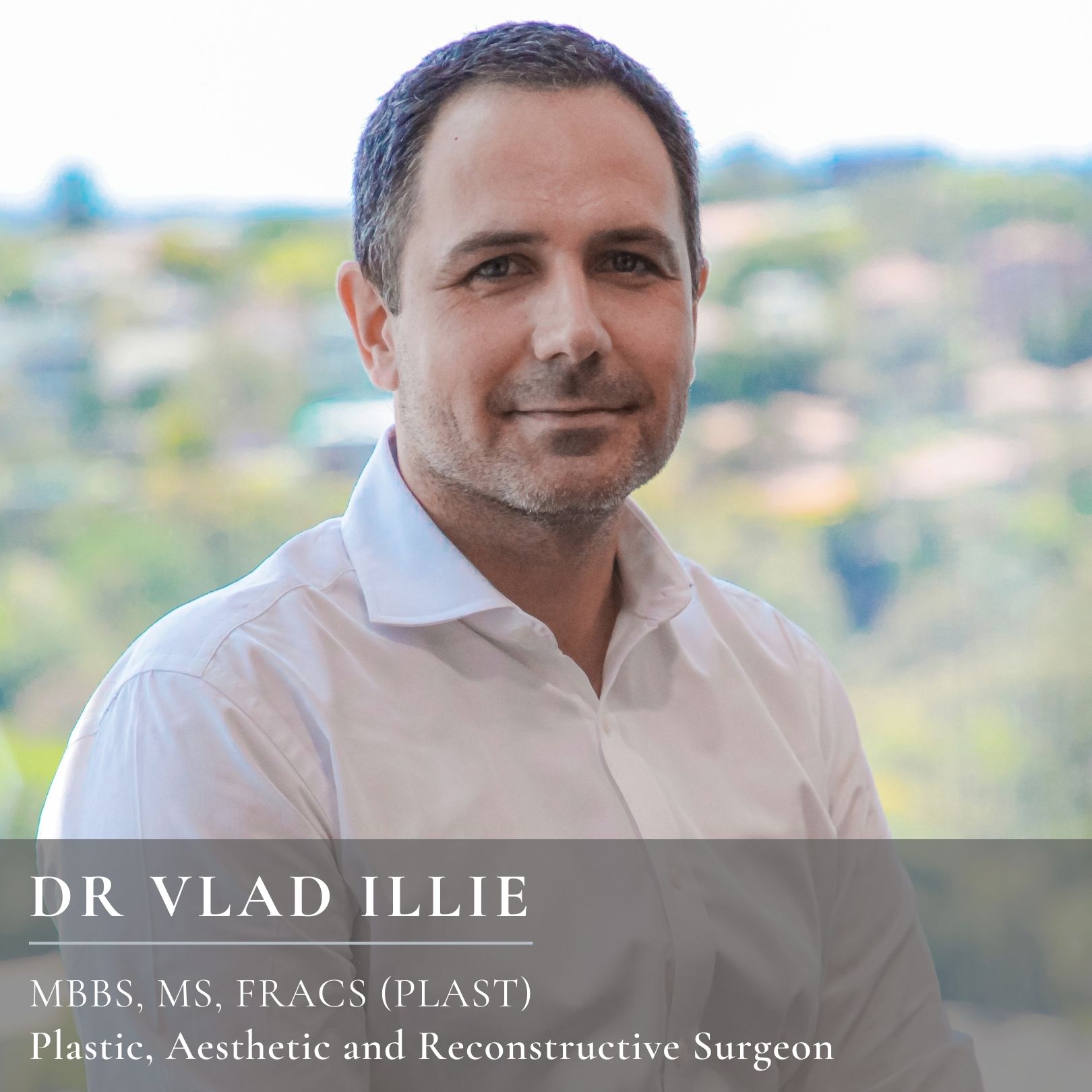
Dr Vlad ILLIE
Specialist Plastic and Reconstructive Surgeon
MBBS, MS, FRACS (plastic and reconstructive surgery)
AHPRA Registration Number MED0000966953
Dr Vlad ILLIE is a Sydney-based specialist plastic and reconstructive surgeon known for his meticulous surgical technique, patient‑centred philosophy, and commitment to natural, long‑term outcomes. With extensive experience across aesthetic and reconstructive surgery, he combines rigorous, research-led practice with a calm, thoughtful approach that supports patients through every stage of their surgical journey.
In addition to his operative work, patients can access a carefully chosen range of evidence-based non‑surgical treatments in his clinic, ensuring a cohesive and thoughtful pathway of care.
Ready to explore your options?
If you’re considering a procedure or simply want clarity on what suits you, starting with a conversation is the most helpful step. Our team offers thoughtful, personalised guidance to help you understand your options and your timing.
Read This Next
Invisible Transformations: The Aesthetic Changes No One Names, But Everyone Notices
There is a particular kind of comment I hear often in consultation: 'She looks wonderful, but I can't say why.' It is usually offered about a friend, a colleague, or a public figure who has undergone some form of aesthetic refinement — and the inability to name the...
Age 40 vs 50 vs 60: How Ageing Changes Direction, Not Just Degree
One of the more persistent misconceptions I encounter in consultation is the idea that ageing is a single, linear process — that a woman at 60 is simply experiencing 'more' of whatever a woman at 40 is experiencing, in greater quantity. Clinically, this is not...
The Treatments We Don’t Talk About Enough
Aesthetic conversation, both in public discourse and among friends, tends to concentrate on a relatively narrow set of treatments — the ones photographed, discussed on social media, or featured prominently in marketing. Yet a considerable portion of the treatment I...
Plastic Surgery Articles – Dr Vlad ILLIE in Sydney
Explore clear, clinically grounded guidance on contemporary plastic surgery and cosmetic medicine. Each piece offers practical information to help you understand modern techniques, treatment considerations, and the principles that shape contemporary aesthetic...
Breast Augmentation Surgery in Sydney
Breast augmentation (augmentation mammoplasty) is a surgical procedure that involves placing implants to increase breast size or improve breast shape. It addresses concerns such as changes in breast volume that may occur after pregnancy, weight fluctuations, or...
Arm Lift Surgery in Sydney
An arm lift (brachioplasty) is a surgical procedure that addresses changes in the upper arm appearance that can occur after significant weight loss, ageing, or other factors, such as loose skin, excess fat deposits, and reduced arm contour definition. The...
Schedule a Consultation
Ph (02) 9101 4707
Fax (02) 9182 0092
office@drvladillie.com.au
Sydney Centre for Plastic Surgery
Suite 1702, Westfield Tower 2
101 Grafton St
Bondi Junction NSW 2022
Central Coast Aesthetics
Suite 2, Albany St North
Gosford NSW 2250
Breast reduction Sydney, Breast Reduction Surgery Sydney, Boob reduction, Breast Surgery, Breast reduction surgery, Breast surgery for back pain, Surgery for large breasts, Oversized breast surgery – Dr Vlad ILLIE, plastic surgeon Sydney
Breast Augmentation Sydney, Breast Surgery Sydney, Boob job Sydney, Breast Implants Sydney Eastern Suburbs, Breast Enlargement Sydney, Breast Enhancement, Breast Enhancement Sydney, Breast implant surgeon Sydney, Silicone Implants, Motiva Implants – Dr Vlad ILLIE, plastic surgeon Sydney
Breast Reconstruction Surgery Sydney, Breast Cancer Reconstruction Sydney, Diep Flap Surgery, Reconstructive Surgery, Breast Reconstructive Surgery, Breast Surgery Post-Breast Cancer, Breast Surgery Post-Mastectomy – Dr Vlad ILLIE, plastic surgeon St Vincent’s Hospital Sydney
Mummy Makeover, Saggy Breasts Surgery, Breast Lift & Implant, Boob lift, Breast enlargement and lift, Breast enhancement Sydney, Breast surgery post-pregnancy, Breast surgery post-weight loss – Dr Vlad ILLIE, plastic surgeon St Vincent’s Hospital Sydney
Breast Augmentation Sydney, Breast Surgery Sydney, Boob job Sydney, Breast Implants Sydney Eastern Suburbs, Breast Enlargement Sydney, Breast Enhancement, Breast Enhancement Sydney, Breast implant Surgeon Sydney, Silicone Implants, Motiva Implants – Dr Vlad ILLIE, plastic surgeon
Breast Revision, Breast Surgery Sydney, Breast implant revision, Breast augmentation revision, Breast implant replacement, Breast Implant Reduction, Breast Implant Replacement, Surgery for botched breasts – Dr Vlad ILLIE, plastic surgeon
Tuberous breast surgery Sydney, tuberous breast correction Sydney, tuberous breasts, plastic surgeon Sydney, cosmetic surgeon Sydney, severe tuberous breasts, mild tuberous breast, Tuberomastoplasty, Lollypop Breast Lift – Dr Vlad ILLIE, plastic surgeon Sydney
Asian Breast Surgery Sydney, Asian breast implants, Asian scar healing breast implants, Asian breast reduction Sydney, Asian breast revision Sydney – Dr Vlad ILLIE, plastic surgeon Bondi Junction
Breast implant removal Sydney, Breast explant Sydney, breast implant removal surgery, breast implant removal plastic surgeon Sydney, BREAST IMPLANT EXPLANTATION SURGERY, removal of the breast implants, breast implant revision procedures performed, including removal of breast implants – Dr Vlad ILLIE, plastic surgeon Sydney